What This Video Covers
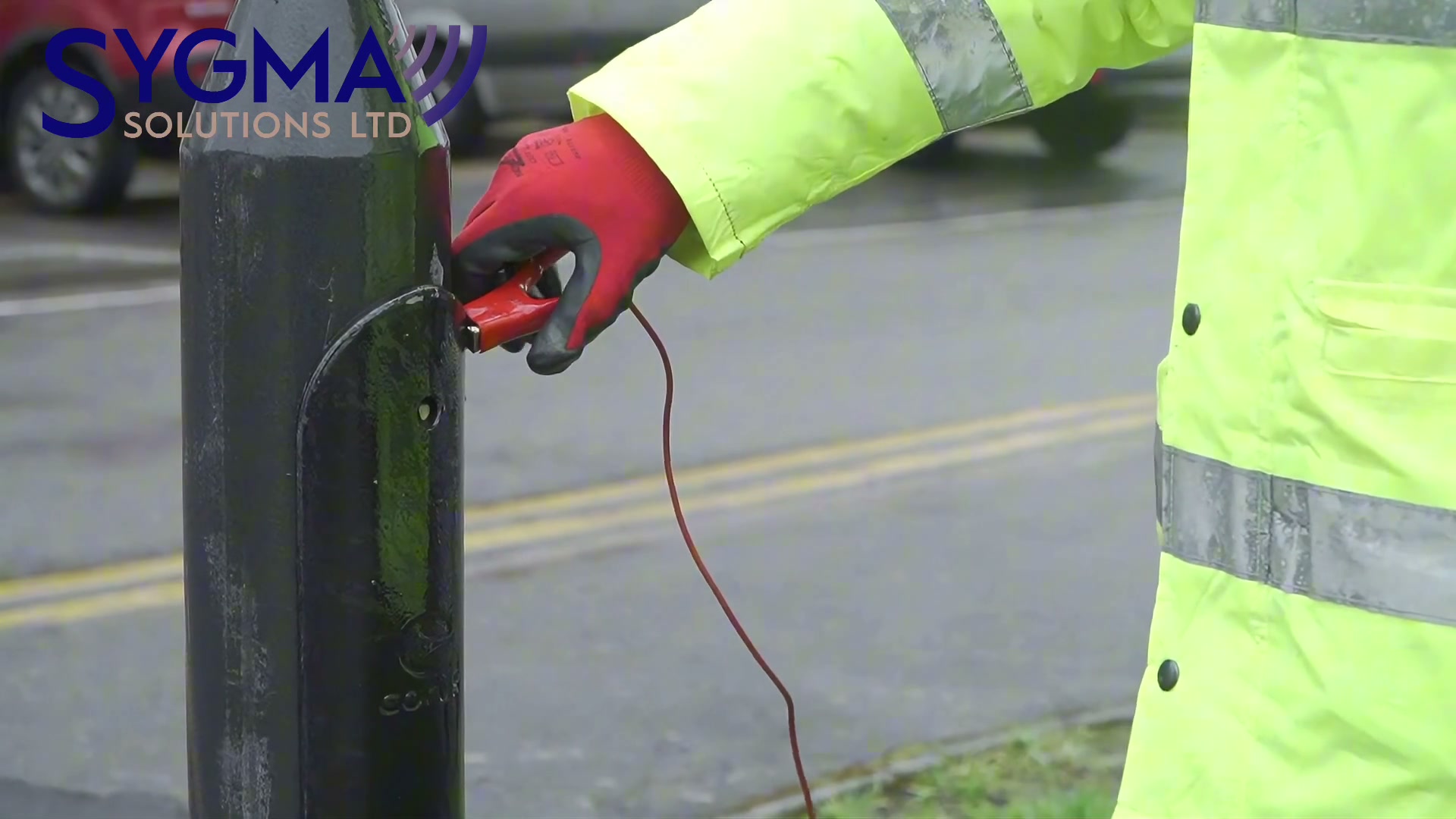
Six minutes of real fieldwork, not slides. A utility detection survey should always start with the Genny applying a signal to known services, and this video shows exactly what that looks like at the roadside: the earth pin going in, the leads going on, the tone changing, and the trace coming off a live lighting column. It finishes on the connections most teams never think to make: gas risers, water hydrants, and the crossbonding system in domestic properties.
Setting Up and Earthing the Genny
The earth pin goes in very close to the column, at a shallow angle to minimise contact with anything below. Keeping the Genny and its leads close to the column lets you work the CAT right up to it. A change in tone from the Genny confirms a good circuit, and once you have it the Genny can be muted while you locate.
On a tee'd off network the signal can run the LV main and pick up the services with it. On a dedicated loop-in circuit only the street lighting is located, and more work must be done: the video is straight about which is which.
Tracing, Depth and the 90-Degree Rule
With the signal applied, the cable is traced with the CAT at 90 degrees to its route. The video covers following the line, what to watch for at junctions and where multiple Genny signals are present, and taking a depth reading properly.
Beyond the Column: Risers, Hydrants and Crossbonding
Street furniture is only the start. Direct connections can be made to metal casings, water hydrants for the water main, and via the crossbonding system at domestic properties, which puts a full signal on the LV service. The habit the video builds: read the plan looking for places to apply the signal, not just places to scan.
Also in the Knowledge Hub
Want this method in your team's hands, not just on their screens? Sygma's CAT and Genny training covers signal application, connection techniques and site practice, delivered on-site, UK-wide.
View the CAT and Genny Course