Duration
One day
08:30 – ~15:00
Group size
Max 8
Per trainer, per day
Delivery
On-site UK-wide
or our Wigan centre
Assessment
80% pass
Written + practical
Accredited & approved by


Certificate options
One course, your choice of badge
The content and assessment are identical whichever route you choose. Pick the certificate your scheme or client requires.
These are certificate fees, not the course price. They are charged per person, on top of the course fee. The course itself is quoted separately, based on your numbers and whether we deliver on-site or you take open-course seats.
Sygma certificate
Sygma In-House
Includedno certificate fee
Our own certificate of competence, issued on the day.
EUSR registration
EUSR Cat 1
+£34per person
Nationally recognised EUSR registration card.
Regulated award
ProQual Level 2
+£35per person
ProQual Level 2 Award: a regulated qualification.
21 Years
One Specialism
Underground utility location training is all we do.
EUSR + CITB
Accredited Course Routes
EUSR Category 1, ProQual CAT1, CITB Approved Training Organisation.
UK-Wide
On-Site Delivery
Travel included. Course delivered at your premises, nationwide.
Dates & availability
Next available course dates
Open course places on our scheduled dates, or we deliver on your site on a date that suits you.
Open course places
From £121per delegate
Certificate fees are charged separately.
Most popular
On-site, at your premises
We come to you, anywhere in the UK, on a date that suits you, using your own equipment, your plans and your site. One fixed price for your group of up to 8, travel included. Contact us for a quote. You are not limited to the dates below.
Tell us your dates →Open public courses
Book individual places
Scheduled open courses for one or two delegates, or when you do not have a suitable site of your own. Priced per delegate. The next available dates are listed below.
See the dates ↓| Date | Course | Duration | Availability | |
|---|---|---|---|---|
| Mon, 9 November 2026 | EUS Category 1 (Wigan)Sygma Solutions Ltd, Wigan | 1 day | 7 places | Book this date → |
| Mon, 9 November 2026 | HSG47 Locating Underground Services (Wigan)Sygma Solutions Ltd, Wigan | 1 day | 6 places | Book this date → |
| Mon, 7 December 2026 | HSG47 Locating Underground Services (Wigan)Sygma Solutions Ltd, Wigan | 1 day | 4 places | Book this date → |
Need a date that is not listed, or the whole course on your own site? We deliver UK-wide, travel included: tell us your dates.
Who Needs HSG47 Training
Who Needs HSG47 Training?
HSG47 requires anyone using cable and pipe locating equipment to be trained and assessed as competent. Some people write it HSG 47 and some HSG47. They are the same document. That applies to delegates using the equipment and to the duty holders responsible for safe management. In practice:
- ›Site delegates and groundworkers — anyone who picks up a CAT and Genny to locate utility services before excavations — the core audience. EUSR Category 1 course is the standard route.
- ›Civil engineers and site supervisors — responsible for supervising excavation work, interpreting utility drawings, and ensuring safe systems of work near utility services. ProQual CAT1 carries additional supervisor content.
- ›Utility workers and contractors — delegates working on or near buried utility services, pipes and infrastructure for utility companies, National Grid sites, highways authorities and network operators. EUSR registration is required by most clients.
- ›Duty holders and principal contractors — project managers, principal contractors and safety professionals have a legal duty to ensure their teams hold a current EUSR Category 1 or ProQual CAT1 card. National occupational standards apply across the team.
Most principal contractors and utility company permit systems require operatives to hold a recognised course certificate meeting the HSG47 Avoiding Danger competence standard — typically the EUSR Category 1 course (Locate Utility Services) or ProQual CAT1 — with the certificate’s expiry date in date before excavations begin.
Course Routes
What Does the HSG47 Course Cover?
Booked by many customers as HSG47 CAT and Genny training, the course covers two complementary areas: using cable avoidance tools and underground services detection devices to safely detect utility services, and managing safe excavation procedures around buried utility services. Sygma delivers each course at your premises UK-wide. Coverage includes utility drawings, line search documents, approved detection methods and the locate utility services HSG47 protocol before any dig begins. The course is safety critical for any work near buried services or on National Grid infrastructure.
CAT and Genny Training
Equipment operation and detection methodology
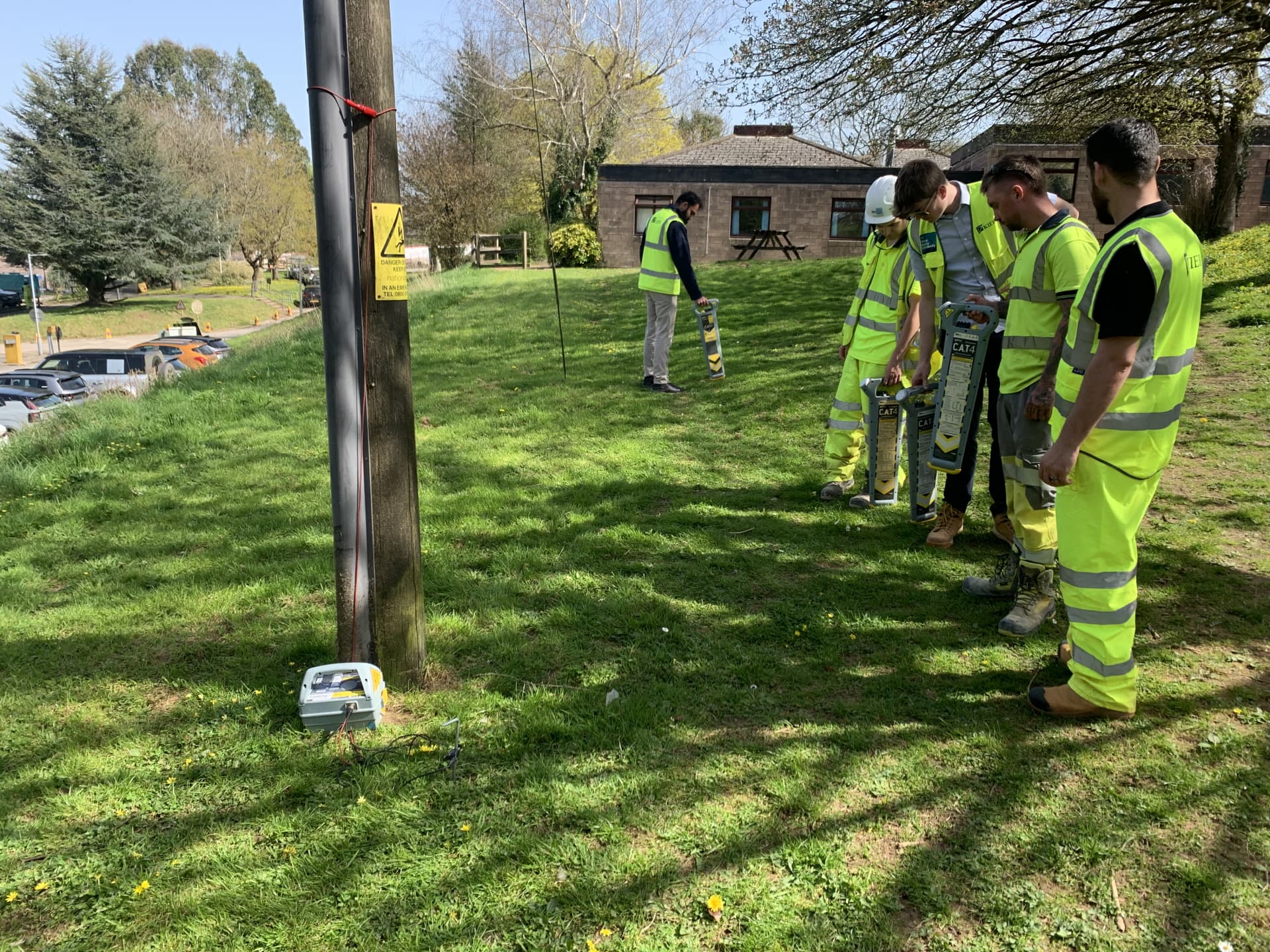
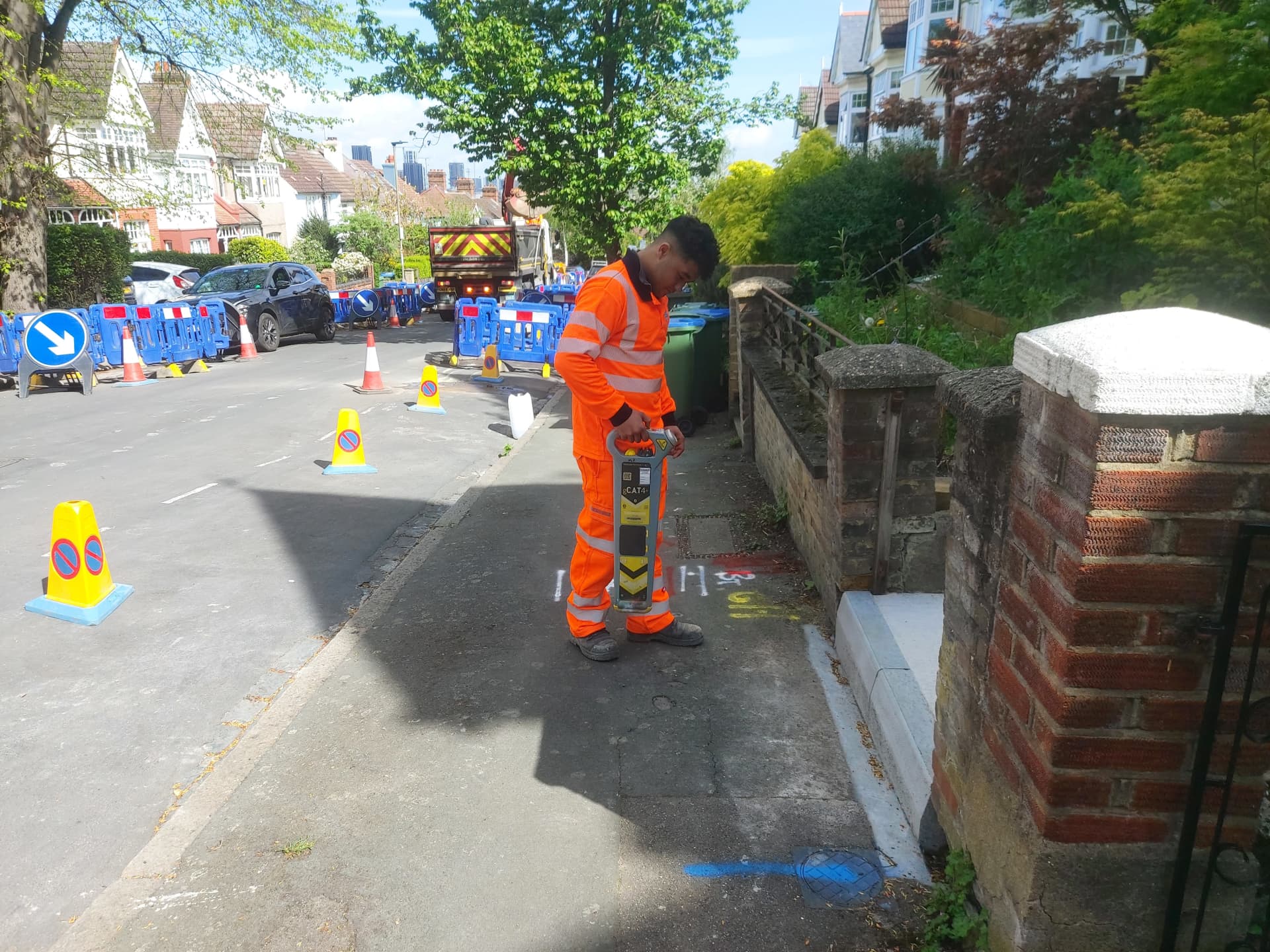
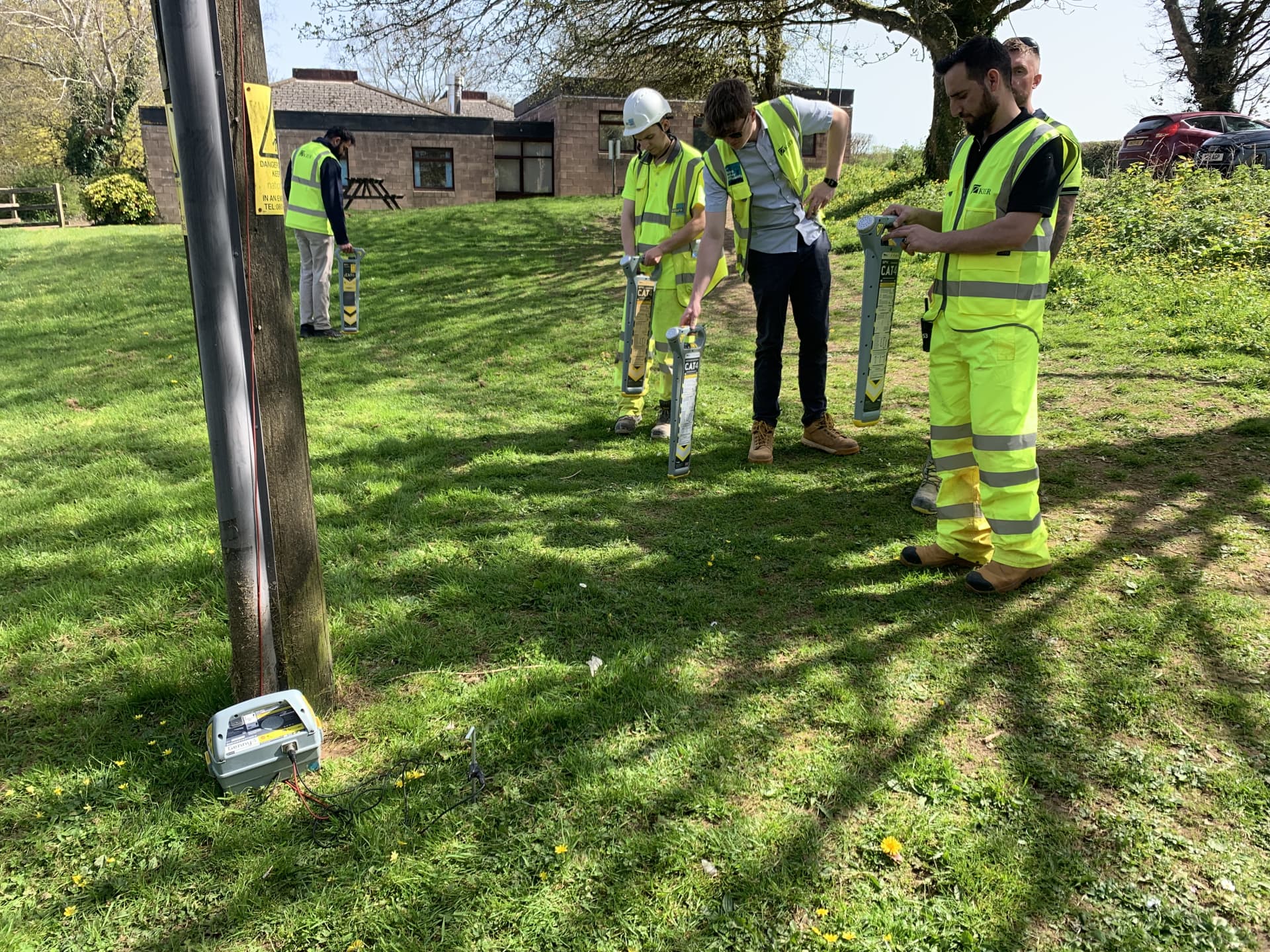
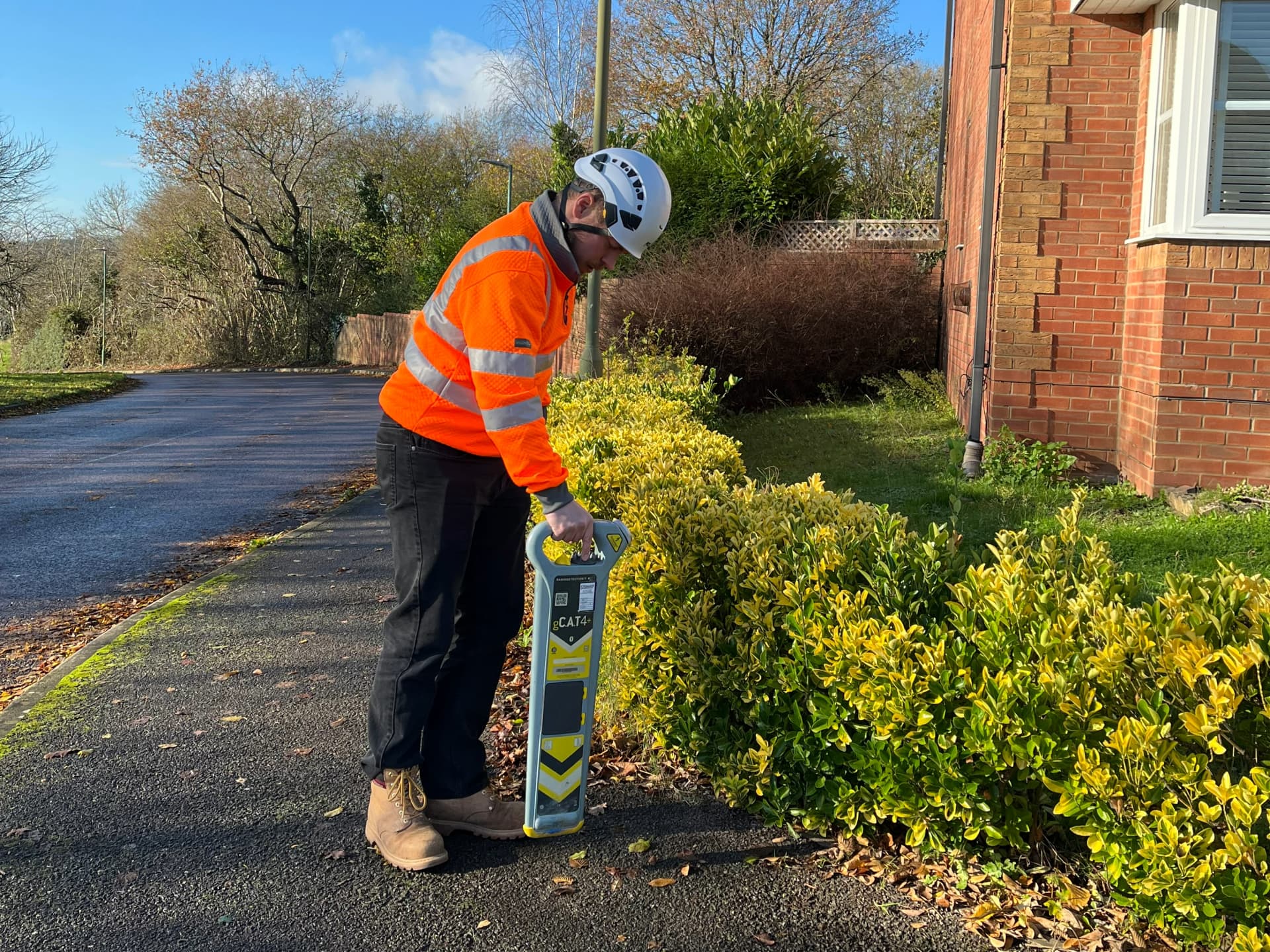
Cable locator (CAT) + signal generator (Genny) used to detect utility services before excavation. Cat genny equipment fundamentals, electromagnetic theory, all four detection modes, practical site assessment, and the Genny-First methodology that measurably reduces service strikes. Delegates also learn to use genny devices effectively as part of the detection process. Approved detection methods for locating buried utility services.
Available as EUSR Category 1, ProQual CAT1, or Sygma in-house course certification. CITB Approved course delivery.
View EUSR CAT and Genny Training →Cable Avoidance Training
Safe excavation procedures and underground risk control
The full safe-dig procedure: utility drawings, advance planning, permits to dig, identifying buried utility services from utility surveying records, safe practice, and how to locate utility services and control underground risk before any team gains access. National occupational standards for safety professionals.
CITB Approved course. Delivered at your premises with your plans and your risk profile. Routes to EUSR Category 1 registration.
View Cable Avoidance Training →Not sure which course? If your team needs to use a CAT and Genny on site, the right course is CAT and Genny Training. If the team needs the full safe excavation procedure and permit process, the right course is Cable Avoidance Training. Many clients book both for complete HSG47 competence coverage.
The HSE Guidance
What Is HSG47?
HSG47 is the Health and Safety Executive’s guidance on avoiding danger from underground services, and that is its full title: Avoiding danger from underground services. It applies to anyone who plans, manages or carries out work that breaks ground.
HSG47 is not legislation. It supports the Health and Safety at Work Act 1974 and the Construction (Design and Management) Regulations 2015, and it describes what the HSE considers good practice. If a utility strike happens and the HSE investigates, one of the first things it looks at is whether the organisation followed the principles in HSG47. Not following them does not automatically mean a prosecution, but it significantly weakens any defence.
It applies to everyone in the chain of responsibility for ground works: the client who commissions the work, the designer who decides where it takes place, the principal contractor who plans and manages it, the supervisor who allocates the team, and the operatives who dig. It is not only for the person holding the CAT or the excavator controls.
HSG47 Competence
What HSG47 Requires, and How the Training Meets It
HSG47 sets out what should happen before, during and after excavation, in four areas, and it expects the people doing the work to be trained and assessed as competent. Each course Sygma delivers is built around those four areas.
Planning the work
HSG47 expects current plans from every relevant asset owner before ground is broken, collated into one picture of what is below the surface. The course covers obtaining and interpreting utility drawings, reconciling records from different asset owners, and recognising where plans cannot be relied on.
Locating services
HSG47 is explicit that plans alone are not sufficient and that locating equipment should be used on site. It references the CAT and Genny specifically, and expects active detection, not passive alone. The course covers all four detection modes, signal application, signal interpretation and depth estimation, taught Genny-First.
Safe digging practices
Once services are located and marked, HSG47 sets out how excavation should proceed: hand digging within defined proximity zones, correct use of mechanical plant, and the different precautions for electricity, gas, water and telecoms. The course covers the full safe-dig sequence and the permit process around it.
Competence
HSG47 expects anyone using cable and pipe locating equipment to be trained and assessed as competent, and expects duty holders to be able to evidence it. Each route below carries a formal assessment and a dated certificate, which is what a principal contractor's permit system asks to see.
Accreditation
HSG47 Training Accreditation Routes
EUSR Category 1 Locate Utility Services
The EUSR Category 1 course — formally Utility Excavations Category 1 Locate Utility Services — is the most widely accepted route to demonstrating HSG47 Avoiding Danger compliance. Locate utility services HSG47 is delivered under national occupational standards. EUSR registration follows successful completion and the EUSR card is issued with a three-year expiry date. Recognised across UK construction, utilities, highways, HV substations and National Grid sectors. Working near HV substations or buried HV cables is a specific area where the EUSR Category 1 card is required by most principal contractors. The course is available as a one-day or two-day in-house format on a date that suits your team; open course dates also available.
ProQual CAT1 Course
ProQual CAT1 is an externally accredited course that assesses all four EML detection modes and practical use of cat genny equipment in a formal practical assessment. The ProQual CAT1 Plus two-day course route includes the Genny-First methodology in its assessment criteria — a standard Sygma helped develop. Three-year certificate on completion; renewed on expiry date by sitting the assessment again. Booking and course dates via the contact form.
CITB Approved Course Provider
Sygma is a CITB Approved Training Organisation. Every course is delivered to CITB ATO standards. CITB levy-paying employers may be eligible for course funding through the CITB Employer Network. Sygma provides all documentation required to support funding applications, including EUSR registration confirmations and course completion dates for audit.
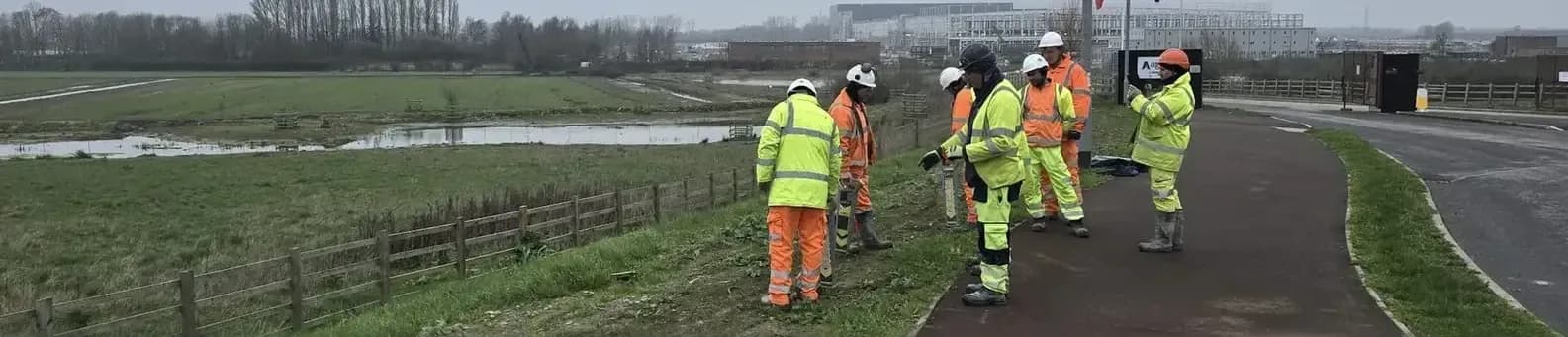
EUSR Category 1 — Locate Utility Services
The EUSR Category 1 Course Route
The EUSR Category 1 course — full title Utility Excavations Category 1 Locate Utility Services — is the headline route to evidence HSG47. Delivered under national occupational standards, the course assessment leads to EUSR registration and the EUSR Category 1 card. Three-year card with a printed expiry date from the registration date.
EUSR Category 1 course content is structured around locate utility services hsg47 protocol: pre-dig planning from utility drawings, signal generator and cable locator use, all four detection modes, the Genny-First methodology, and the safe-dig sequence that follows. Each delegate assessed against EUSR national occupational standards. Category 1 Locate Utility Services registration is processed on the completion date; 1 Locate Utility Services framework is the formal name on the card.
In-house EUSR Category 1 course dates available on request — pick a date that suits, up to 8 delegates per course at your premises, travel and EUSR registration included. Open course dates also available at the Wigan course centre. The locate utility services hsg47 syllabus is identical across in-house and open delivery — same assessment, same EUSR Category 1 card. Full details and dates are on our EUSR CAT 1 training page.
Why Choose Sygma
Why Sygma for HSG47 Training
Specialism
The UK’s Only Independent Specialist
No surveys, no equipment sales, no manufacturer relationships. Underground utility location training is the only thing Sygma does. Unbiased methodology, EUSR-accredited course content that genuinely reduces service strikes — not just issuing certificates.
Methodology
Genny-First — Proven to Work
Sygma-trained delegates show a 70-80% increase in signal generator usage through approved detection methods, measured via locator data downloads. Changed behaviour on site, not just a card in a wallet. EUSR Category 1 and ProQual CAT1 course routes both embed this methodology.
Delivery
Your Premises, Nationwide
Every course delivered at your premises across the UK. Travel included, no hidden extras. Your delegates learn on the same ground and buried utility services they encounter daily — not on a generic training centre rig. Course dates flexible.
Trainers
Directly Employed, TAQA Qualified
All Sygma trainers are directly employed ex-utility surveyors, safety professionals or ex-equipment manufacturer specialists. They have carried out the work they teach across National Grid sites and utility services contracts — credibility no generalist health and safety company can replicate.
UK Delivery
UK-Wide HSG47 Training Delivery
Course delivery at client premises across the UK. Common delivery regions:
- ›London and the South East
- ›Manchester and the North West
- ›Birmingham and the Midlands
- ›Bristol and the South West
- ›Leeds, Sheffield and Yorkshire
- ›Scotland and Northern Ireland
- ›Northern England and the North East
Travel included with no hidden extras. Sygma’s training centre in Wigan is available as an alternative venue at no additional cost — open course dates also available there.
Near Me
We come to you. Course delivery at your premises — no travel for delegates, training on the real utility services they actually work near, and course content tailored to your company’s permits and procedures.
CITB Funding
Sygma is a CITB Approved Training Organisation. CITB levy-paying employers may be eligible for course funding through the CITB Employer Network. Sygma provides all documentation required for applications.
Common Questions
Frequently Asked Questions
Is HSG47 training a legal requirement?
Not in the strict sense — HSG47 is HSE guidance, not legislation. The Health and Safety at Work Act 1974 and the Management of Health and Safety at Work Regulations 1999 require employers to ensure workers are trained and competent for the work they carry out. As HSG47 is the recognised industry standard for safe excavation near utility services, not providing this course creates a significant duty of care exposure. Most principal contractors and utility companies require evidence of an EUSR Category 1 or ProQual CAT1 course before allowing operatives to dig.
What is HSG47 training?
The collective term for any course meeting the competence requirements of the HSE guidance document 'HSG47: Avoiding Danger from Underground Services.' Covers cable avoidance tools used to locate utility services HSG47 standard before excavations begin, safe working procedures near buried utilities, and the duty holder obligations under national occupational standards. In practice this means a course fulfilling the HSG47 competence standard — typically the EUSR Category 1 course (formally Utility Excavations Category 1 Locate Utility Services), ProQual CAT1, or an equivalent assessed course from a CITB Approved Training Organisation.
How long is the course?
One or two days, depending on format and accreditation route. The one-day course covers theory plus the written and practical assessment required. Two-day course formats add depth to the practical element or incorporate a second accreditation assessment. EUSR Category 1 and ProQual CAT1 are one-day courses; ProQual CAT1 Plus and the two-day in-house format run over two days. For complete beginners, the two-day course is recommended. Course dates available to suit your team — registration via the contact form.
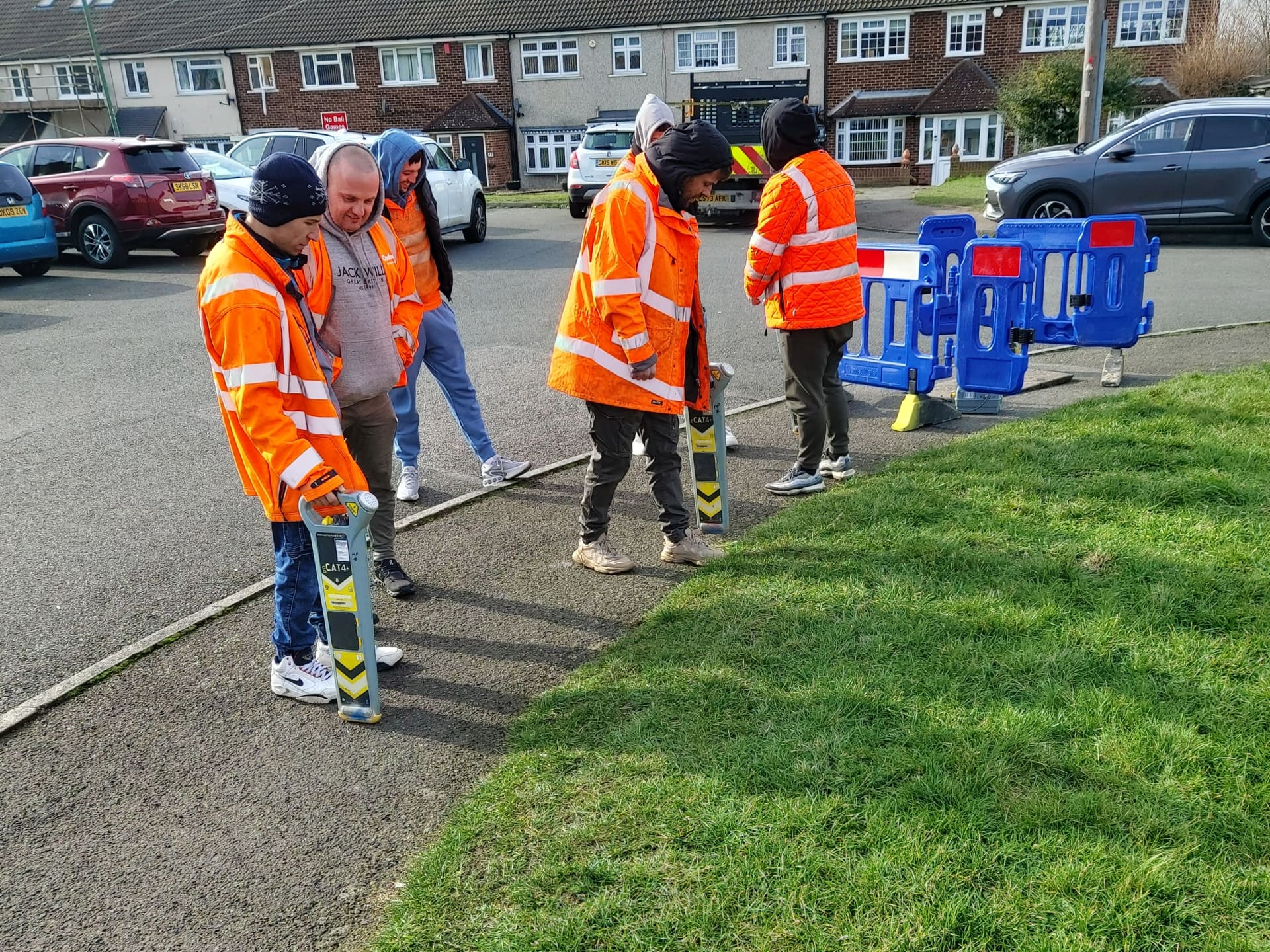
What certificate do you get from the course?
Delegates receive the EUSR Category 1 card — formally the Utility Excavations Category 1 Locate Utility Services qualification — on the most widely recognised accreditation route. Issued by the Energy and Utility Skills Register following course completion and EUSR registration, valid for three years (expiry date printed on the card), recognised across UK construction, utilities, HV substations and highways sectors. ProQual CAT1 is an alternative accredited course that produces a three-year assessed certificate with its own expiry date. Sygma also issues an in-house certificate of completion for companies that do not require an awarding body card. All certificates are backed by written and practical assessment records.
How much does the course cost?
Open courses at our Wigan centre are from £121 per delegate. On site, it is one fixed price for your group of up to 8 delegates at your premises, travel included, with no hidden extras: contact us for a quote. Certificate fees (EUSR £34, ProQual £35) are charged per person on top of the course fee. CITB-levy employers may access funding via the CITB Employer Network.
Does the certificate need to be renewed?
Yes. EUSR Category 1 and ProQual CAT1 certificates expire after three years and must be renewed before the expiry date. Most principal contractors and utility companies will not permit delegates on site once a certificate has lapsed. Renewal involves a refresher course and reassessment, then EUSR registration is updated and a new card issued with a fresh expiry date. Sygma recommends booking renewal in the three months before your current registration ends.
Related Reading
Permit to Dig, Trial Holes and Exclusion Zones
The whole excavation sequence: the permit to break ground, the detection survey, then exclusion zones and safe digging.
Genny-First Methodology
Why applying the signal generator first increases buried utility detection rates.
Strike Prevention for Site Managers
Practical guidance for managing excavation risk near utility services.
EUSR Cat1 vs ProQual CAT1
Side-by-side comparison of the two main accreditation routes.
Book HSG47 Training
EUSR Category 1 and Cable Avoidance course routes delivered at your premises, UK-wide. CITB approved. Travel included. EUSR registration included in the course price. For current course dates and pricing, contact us for a tailored quote.