Utility Avoidance
Service Coordinator (USC) Training | Role & Responsibilities
The Underground Service Coordinator (USC) is an appointment made by the employer, not a qualification. This course prepares your appointed USC to source and review utility plans, interpret survey data, and complete the documentation the role demands.
Formats
1-day standalone or 3-day with Level 3
USC Status
Appointment, not a qualification
Prerequisite (1-day)
EUSR CAT1 within 12 months
Delivery
In-house, nationwide UK
What Is the USC Role?
An Appointment, Not a Qualification
The Underground Service Coordinator is an individual appointed by the employer to coordinate underground utility avoidance activities on a project. The appointment is a requirement under the Overhead and Underground Excavation Services Standards (it is not a qualification that a delegate earns, but a responsibility that a company assigns).
The USC is responsible for ensuring the right utility plans are in place before excavation starts, that the locate has been conducted correctly, that permits are completed, and that the site team has the information they need to work safely. It is a coordination and oversight role, not an operational locating role.
Because the USC role is an appointment rather than a qualification, companies often underestimate the knowledge it requires. This course makes sure the person you appoint actually understands what they are responsible for.
Important
The USC is an appointment, not a qualification.
Your company appoints the USC. Sygma trains them to carry out that role correctly. Completing the USC course does not register your delegate on the EUSR or any other qualification register (it trains the person your organisation has chosen to fill the role).
If your team needs the EUSR CAT1 and CAT2 qualifications alongside the USC role training, see the EUSR CAT 1 and 2 Training (Combined) page — USC content can be delivered as part of the same on-site programme.
Course Formats
Two Ways to Deliver the USC Training
1-Day Standalone
Prerequisite (EUSR CAT1 within 12 months)
For delegates who have already completed the EUSR CAT1 course within the last 12 months. The CAT1 content is not repeated (the day focuses entirely on the USC-specific responsibilities, documentation, and coordination skills).
3-Day with Level 3 Certificate
No prior qualification required
For teams who want the USC training alongside a Level 3 Certificate in Utility Mapping and Surveying in a single programme. No prior qualification is required (CAT1 content and the Level 3 units are all built into the three days).
1-Day Standalone Content
What the Standalone USC Day Covers
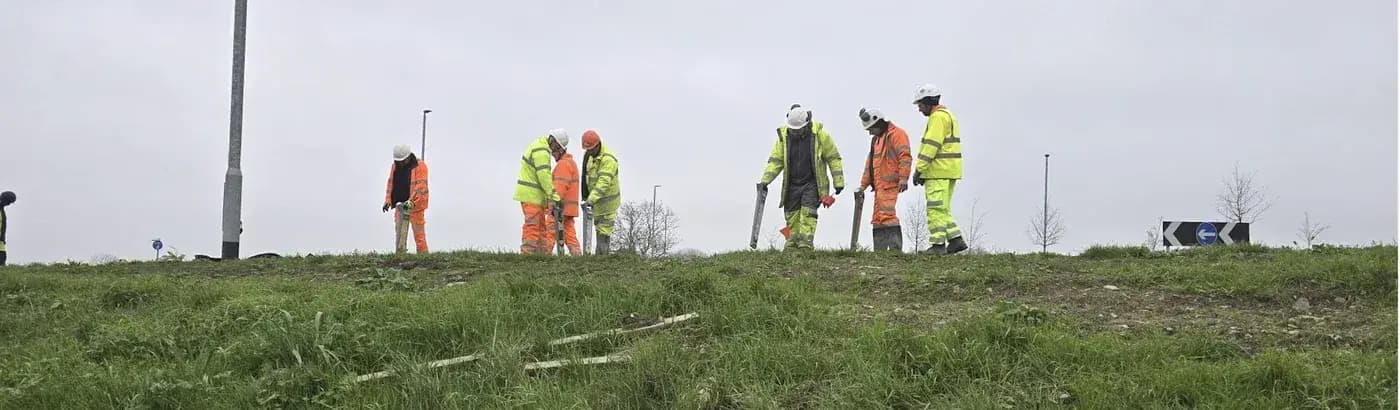
The 1-day standalone course focuses on the USC-specific content. The EUSR CAT1 theory is not repeated. Both a classroom session and a short site practical are included.
Classroom
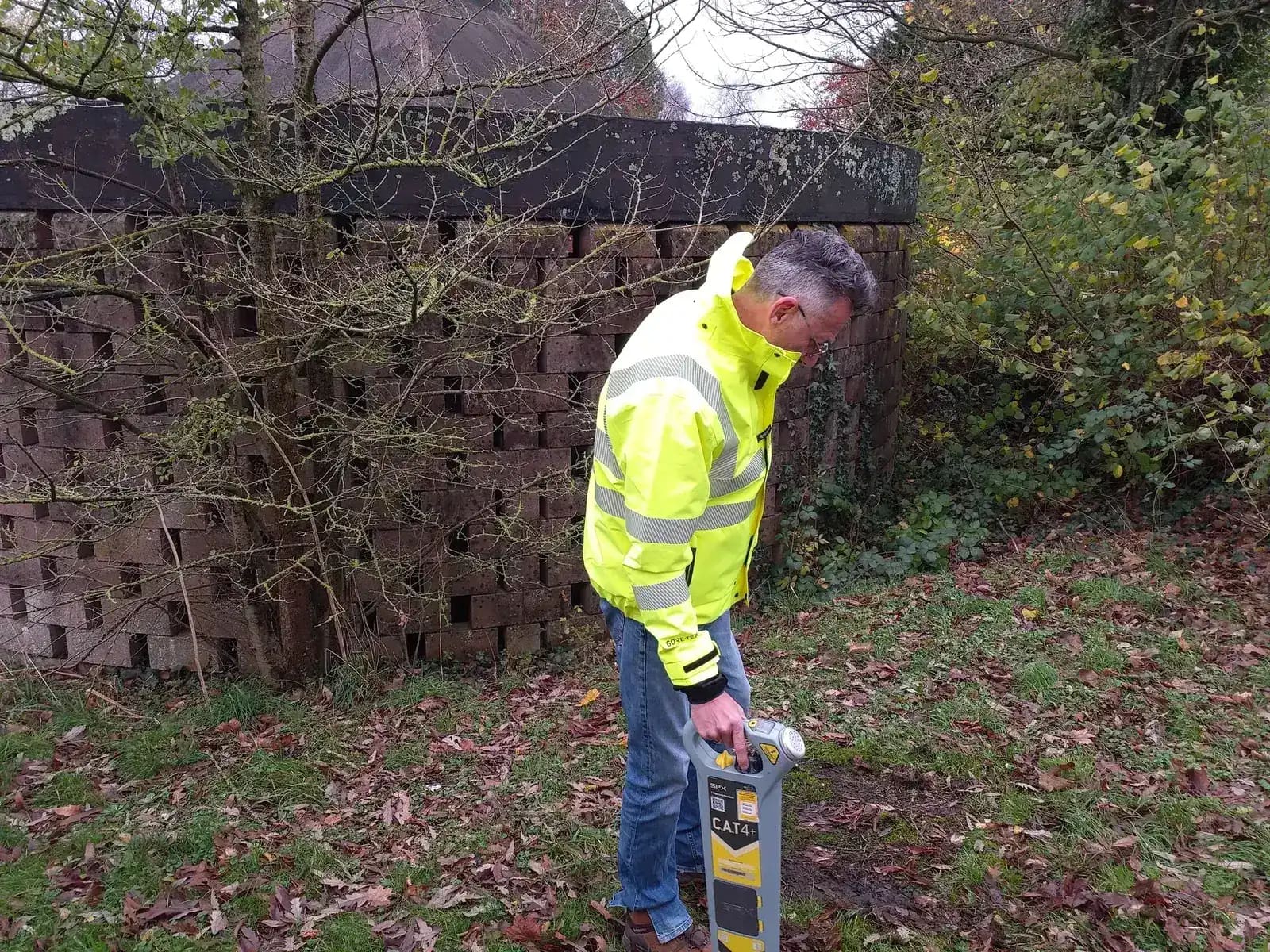
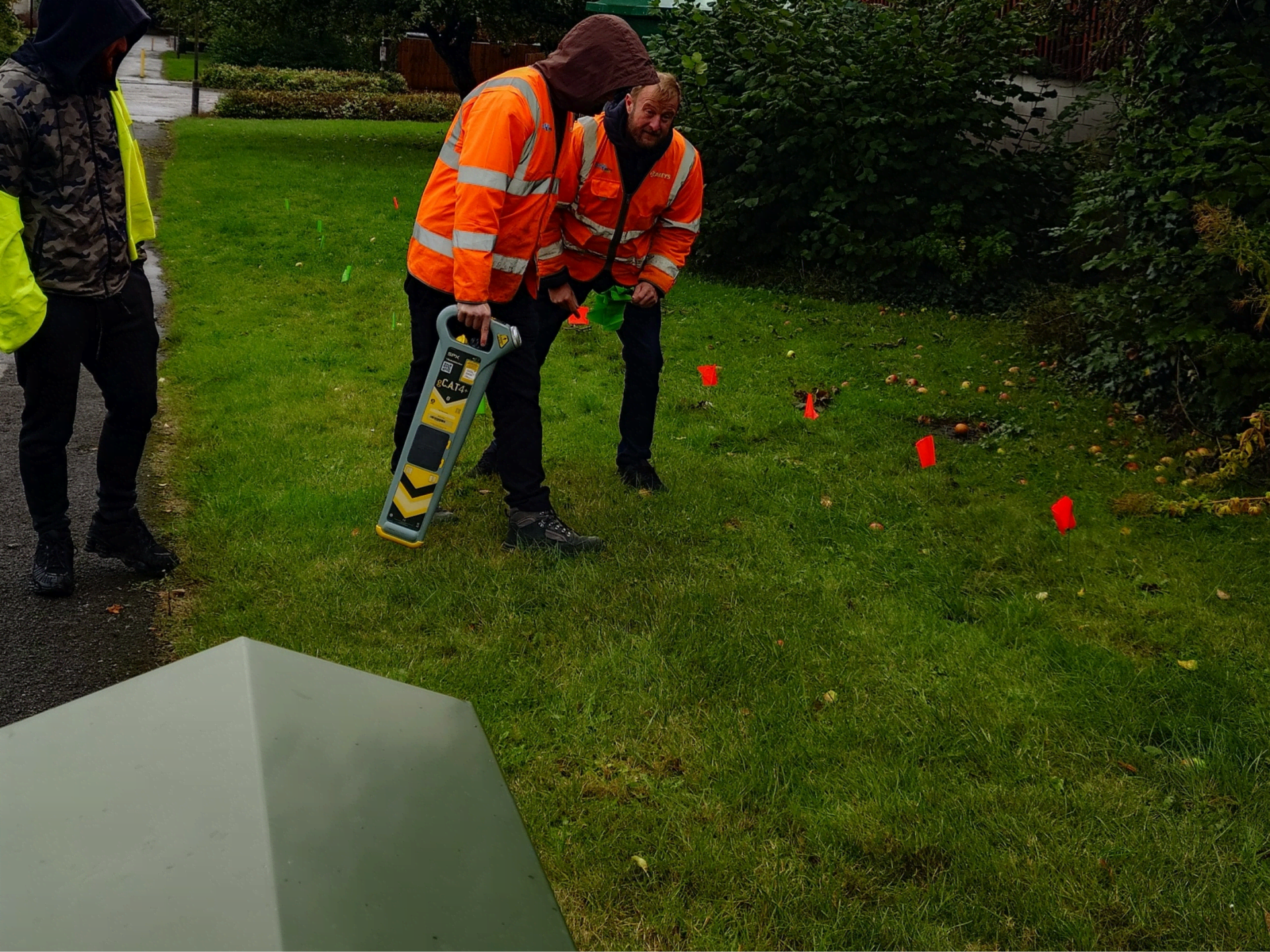
Site Practical
3-Day Format: Day-by-Day Outline
Day 1
Legislation and guidance, PAS128 survey levels, Unit 1: Site Reconnaissance, site sketch with colour-coded annotation, introduction to Unit 2: Desktop Survey
Day 2
Unit 2: Desktop Survey workbooks, desktop survey compilation drawing, Level 3 Certificate sign-off, client and designer responsibilities, utility network overview, CAT Manager data download, EM theory and principles, receiver and transmitter setup
Day 3
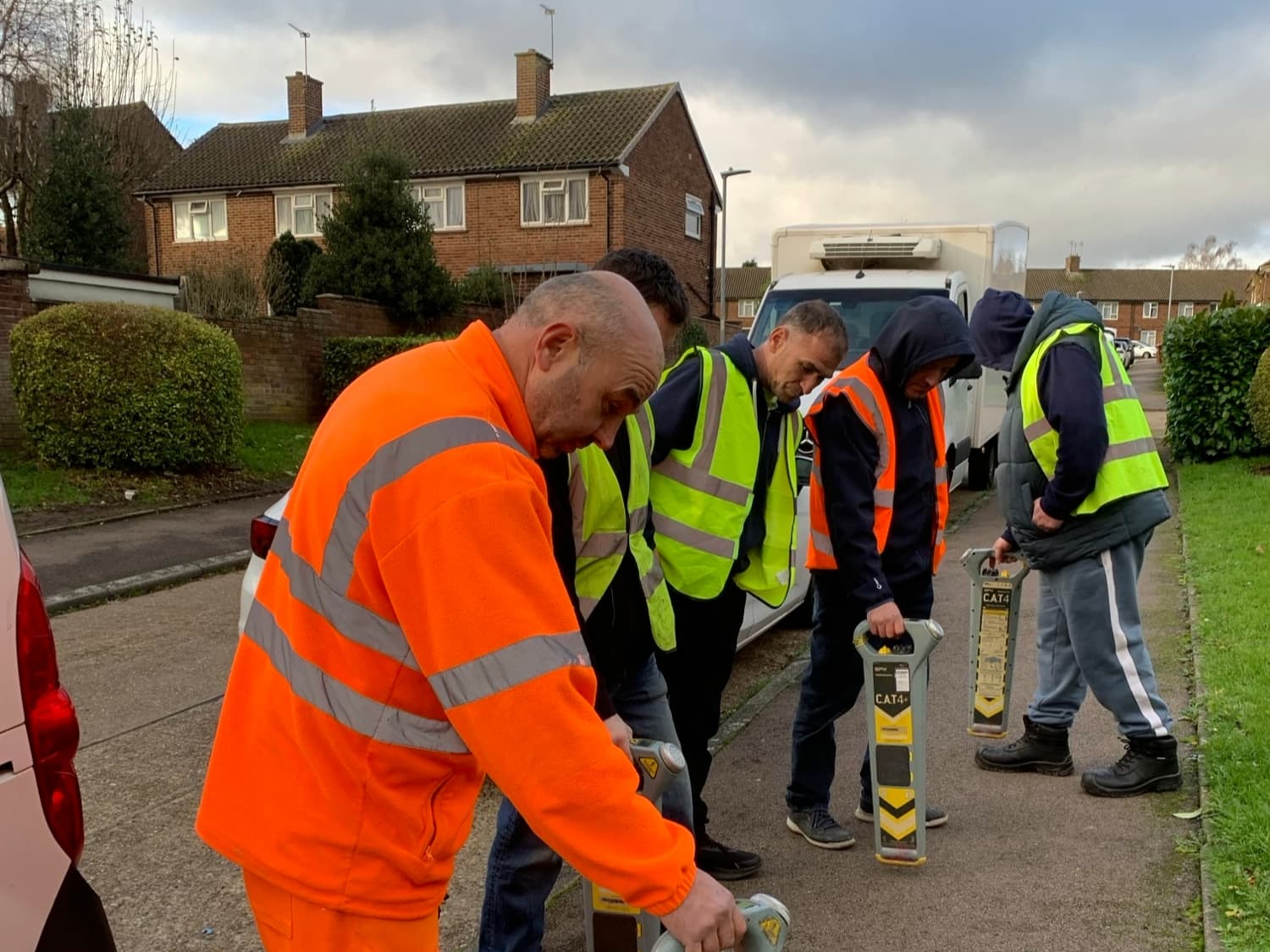
Advanced EM utility location using RD8200 and Vivax Pro 3, frequency selection, HV cable location, signal distortion, depth estimation, peak and null antenna, current direction, induction sweeps, survey methodology and service marking
What You Get

Audience
Who Should Attend
The Appointed or Designated USC
The individual your company has appointed (or is planning to appoint) as Underground Service Coordinator. This course gives them the knowledge to fulfil the role correctly: sourcing plans, reviewing surveys, completing permits, and coordinating the excavation safely.
Supervisors and Site Managers
Supervisors and site managers responsible for utility avoidance oversight who want to formalise their understanding of the USC role and the documentation it requires.
Companies Setting Up a USC Process
Companies that need to appoint a USC but are unsure how the process should work in practice. This course gives your designated person the knowledge to set up and manage the process from day one.
Common Questions
Frequently Asked Questions
Is the USC a qualification?
No. The Underground Service Coordinator is an appointment made by the employer. It is not a qualification that delegates earn through an awarding body. The course trains the person being appointed to understand and fulfil the role correctly. The USC appointment itself is the employer's responsibility.
Do delegates need to have done the EUSR CAT1 course first?
For the 1-day standalone format, yes. Delegates must have completed the EUSR CAT1 course within the last 12 months. If they have not, the USC course should be delivered over 2 days to incorporate the CAT1 content. For the 3-day format with Level 3 Certificate, no prior qualification is required.
What is the difference between this course and the EUSR CAT1 and CAT2 Combined with USC course?
The EUSR CAT1 and CAT2 Combined with USC course includes the EUSR CAT1 and CAT2 qualifications alongside the USC content (it is a qualification route through EUSR). The standalone USC course is for delegates who already hold CAT1 and need USC-specific training, or for teams who want to pair the USC content with the Level 3 Certificate rather than the EUSR qualification.
What is the Level 3 Certificate in Utility Mapping and Surveying?
The Level 3 Certificate is a qualification covering site reconnaissance, desktop survey, and utility survey processes mapped to PAS128. The 3-day USC format includes this qualification alongside the USC training content. The qualification is issued on completion of the three days.
What site or venue is required?
Both formats require a meeting room with welfare facilities. The 1-day standalone format includes a site practical element, so a suitable outdoor area with buried utilities near the training room is also required. For the 3-day format, an outdoor practical area is required for Day 3.
Does this course cover GPR?
The USC course includes GPR awareness (an overview of what GPR does and when it should be specified). It does not include GPR operation training. For GPR operation training, see the GPR Training course in the Utility Mapping section.
Why Sygma
Why Choose Sygma for USC Training
The USC role demands knowledge across plans, location, safe dig, and coordination. Sygma trainers understand all of it.
Coordinating Safe Work
For those managing teams who dig near services. Understanding of both location and excavation requirements.
USC training that covers the full range of coordination responsibilities and documentation.
Specialist Trainers
Directly employed, ex-surveyors and ex-manufacturers, TAQA qualified.
Trainers with real-world experience in coordination roles and site management.
Real Practical Assessment
Structured on-site practical in real conditions.
For the 1-day format, practical site element with real utilities and documentation.
Independent
No surveys, no equipment, no manufacturer relationships.
Training focused on what the USC role actually demands, not commercial interests.
We Come to You
Delivered at your site, travel included.
In-house training at your location, using your site and documentation.
Two Format Options
1-day standalone or 3-day with Level 3 Certificate in Utility Mapping.
Choose the format that matches your team's qualification needs.
Funding
CITB Employer Network
Training Support
Sygma is a CITB ATO. Contact your CITB Employer Network adviser about funding. All Sygma courses exceed 51% practical.
CITB-registered employers may be able to access Employer Network funding towards training costs. USC training and the Level 3 Certificate are recognised as professional development supporting your management capability.
Next Steps
Related Training Courses
Build your team's capability across utility avoidance and coordination roles.
EUSR CAT 1 Training
The foundation. USCs need to understand locating as well as coordinate it.
EUSR CAT2 Safe Dig
Safe excavation and permit requirements. Essential knowledge for USCs managing dig teams.
Plans and Process Training
Master utility plan interpretation. USCs source and review plans every day.
Enquire About Service Coordinator (USC) Training
1-day standalone (EUSR CAT1 prerequisite) or 3-day with Level 3 Certificate. In-house at your site anywhere in the UK. Contact us to discuss the right format and receive a tailored quotation.