Duration
Two days
08:30 – ~15:00, flexible
Group size
Max 8
Per trainer
Delivery
On-site UK-wide
or our Wigan centre
Qualification
ProQual L2
Regulated award
Accredited & approved by


The qualification
ProQual Level 2 Award in Utility Avoidance
A nationally recognised, regulated QCF Level 2 qualification. Sygma include additional advanced content in both the theory and the practical that meets and exceeds the requirements of the award.
Course objectives
- ✓Improve awareness of how to avoid damaging buried utilities, and operate cable locators to locate and subsequently avoid them
- ✓Complete and pass the knowledge-based assessment for the QCF Level 2 Award in Utility Location and Avoidance
- ✓Complete and pass the practical assessment for the QCF Level 2 Award in Utility Location and Avoidance
Certification
Single regulated route
The ProQual registration and certification fee, per person. Separate from and on top of the course fee, which is quoted on your numbers and delivery.
Classroom & practical
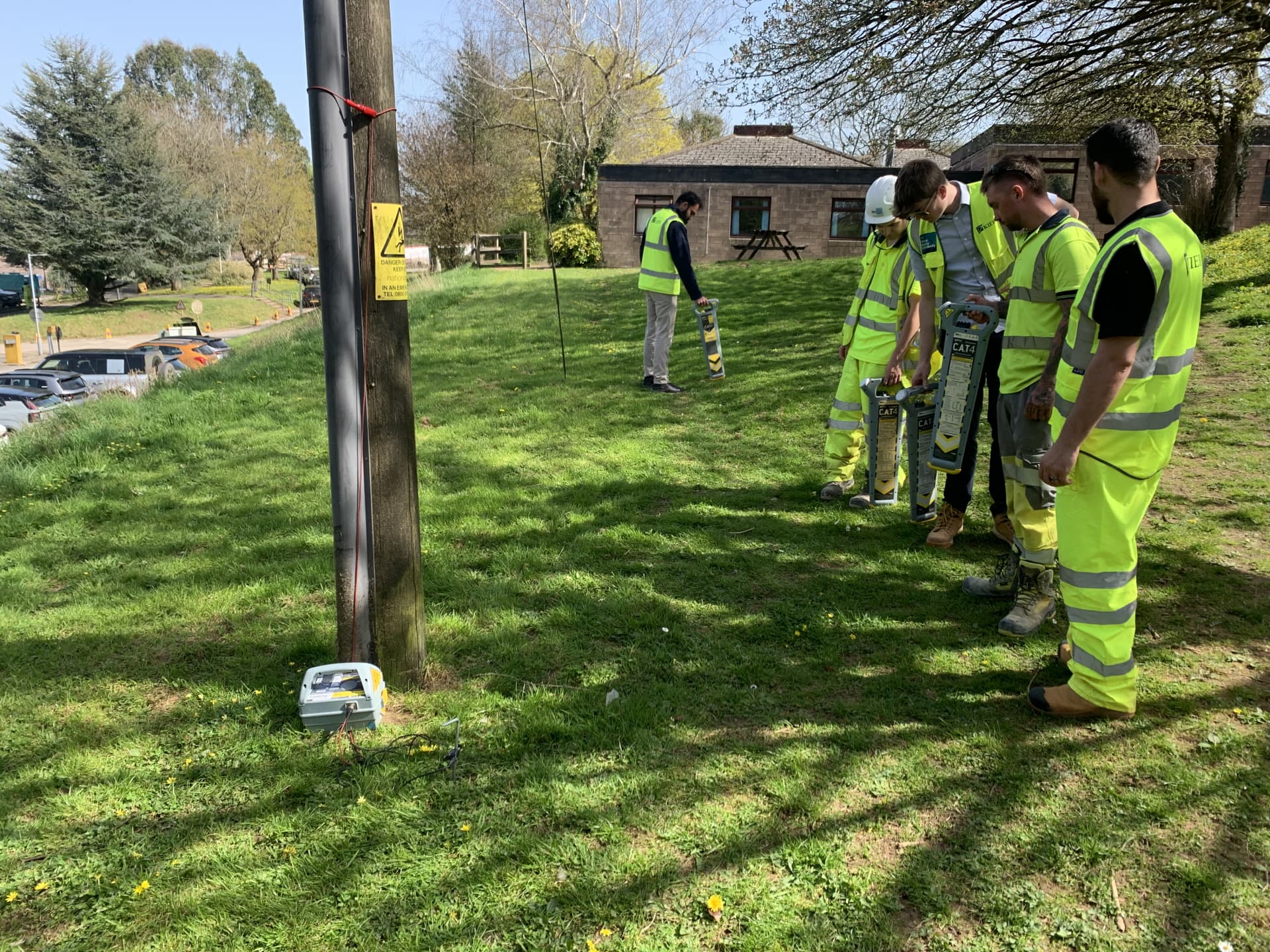
A full classroom grounding in the law, the networks, the plans and the theory of detection, then out on the ground for a full locating practical with a strong Genny-first emphasis.
Day one · in the classroom
Classroom
The why behind the kit — the legislation and responsibilities, how utility networks are built, reading the plans, and the physics of detection.
Why we locate — the risks & HSG47
The health, safety and financial implications of striking a buried service; how to comply with HSG47 (Avoiding Danger from Underground Services) and work to a safe system of work; other national legislation and company policy documentation; and the consequences of utility strikes.
Legislation & guidance
The legislation and guidance that applies, and the important differences between them.
Client & designer responsibilities
Client and designer responsibilities under HSG47.
Overview of utility networks
How electricity, gas, water and communications reach our homes and businesses, and the different cable and pipe types, materials and connectivity involved.
Buried Service Plans (STATS & PAS128)
Interpreting and understanding the different types of service plan, including their inaccuracies and limitations.
Calibration & equipment checks
Calibration requirements, correct storage, and functional checks.
Electromagnetic theory & myth-busting
How a pipe & cable locator works, the theory and its limitations, tips & tricks, and a session on what the equipment genuinely can and cannot locate.
Controls & operation
Correct use of the cable locator and signal transmitter in all modes, with strong emphasis on transmitter (Genny) use.
Signal interpretation
Interpreting the signal, and locating service joints and changes of direction and depth.
Signal distortion
Signal distortion and its effects on location accuracy.
Transmitter techniques
The benefits and applications of dual frequency; using the Genny to locate small or non-earthed cables using capacitance; effective earthing and earth positioning; blind induction search and effective nulling of services.
Data logging (optional)
Recording and reviewing locator data.
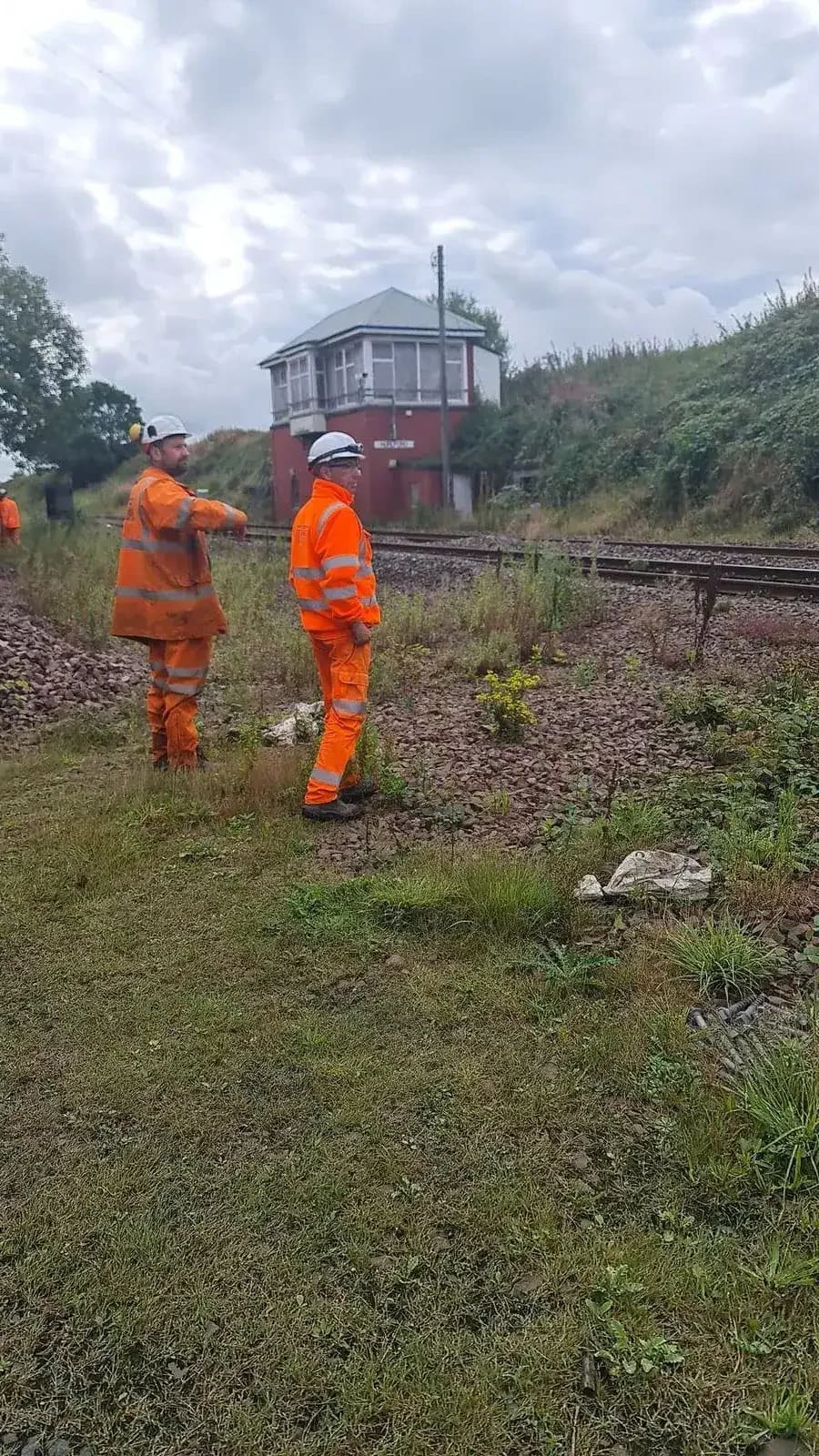
Day one · on the ground
Practical
Everything from the classroom, put to work on a real survey — leading with the Genny and proving the kit across all its modes.
- Use service plans and existing site information to establish the indicated routes of buried mains & services, and learn the importance of site visual checks before any work begins (plans provided by the client)
- Correct use of the equipment in all modes, confirming and locating buried mains & services from the plans and previous visual inspection, testing and ensuring the equipment is in satisfactory operating condition
- Use the equipment correctly in all modes, and understand the benefits of always using the cable locator & signal transmitter combination, including dual frequency where applicable
- Apply capacitance techniques
- Effectively locate "problem" services such as street lighting and small service/comms cables
- Understand the effect of repositioning the Genny earth
- Conduct a utility survey starting with the Genny
Survey & assessment
A review of day one, a further electromagnetic survey on different ground, and the individual knowledge-based and practical assessments that lead to the qualification.
Day two · classroom
Review & knowledge assessment
Consolidate day one, resolve any problems, then sit the knowledge-based assessment.
- Review of the previous day
- Problems discussed and any additional training identified
- Knowledge-based assessment
Day two · practical
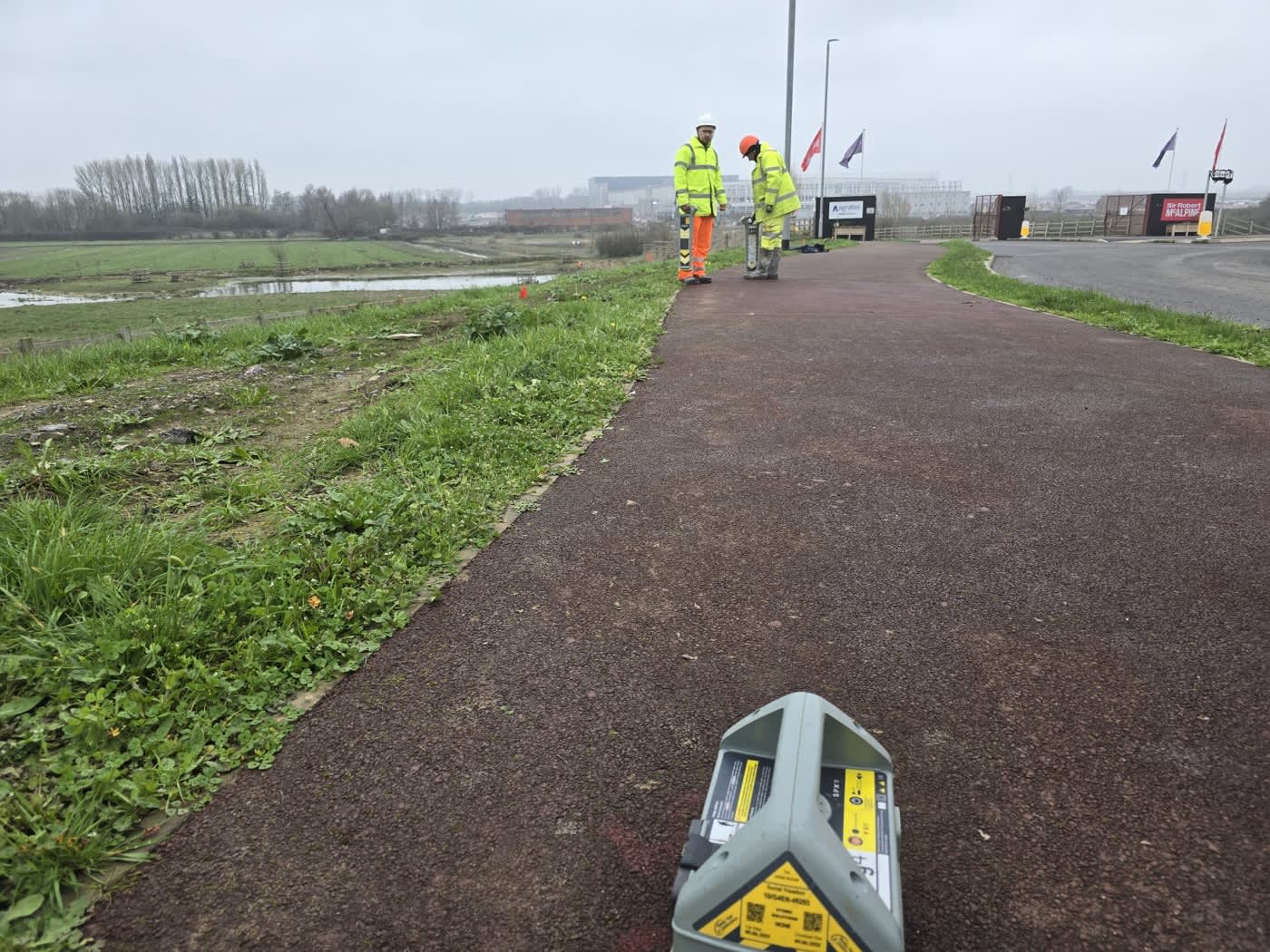
Further survey & practical assessment
A fresh survey on different ground, with any final training, then the individual practical assessment.
- An additional practical exercise — performing an electromagnetic utility survey of a different area, with additional training if needed
- Corrective action taken where needed
- Individual practical assessments completed in line with the QCF Level 2 requirements and Sygma's additional content
On the days
What the two days need
Sygma bring the trainer and the expertise. To run a full, properly-assessed two days, the host provides:
- ✓STATS plans (buried service drawings) appropriate to the site MUST be available for the practical work. If none exist, Sygma can supply them for an agreed cost before the course is booked.
- ✓Each operative needs the cable location equipment they are being trained on. Sygma carry a stock of equipment but cannot guarantee it is the same model delegates use; Sygma can supply it for an agreed cost before booking.
- ✓A meeting/conference room suitable for all delegates and the trainer (up to 8 delegates), with appropriate welfare facilities.
- ✓Operatives MUST have appropriate PPE to comply with national and company health and safety requirements.
- ✓A suitable site with buried metallic utilities near to the meeting/conference room.
Course timings. Timings remain fluid, but the course runs over two days with a suggested start of 08:30 and finish around 15:00, with appropriate breaks.
Assessment
Knowledge, then practical
Delegates sit a knowledge-based (written) assessment in the classroom and an individual practical assessment on the ground, both completed in line with the QCF Level 2 requirements and Sygma's additional content. Passing both leads to the ProQual Level 2 Award. Delegates with dyslexia or reading difficulties can be supported through the assessment.
Accreditation & standards
Regulated ProQual (QCF) Level 2
A regulated qualification in utility location and avoidance, built on HSG47 and PAS128, delivered with additional advanced content that exceeds the standard:
The regulated qualification, in full
Official qualification specification
The formal ProQual specification behind the award — the qualification profile, who it is for, and the exact learning outcomes and assessment criteria every candidate is assessed against.
- Full qualification title
- ProQual Level 2 Award in Utility Avoidance and the Location of Buried Services in Construction
- Ofqual qualification number
- 601/1855/6
- Level
- Level 2
- Mandatory unit
- L/505/7112 — Utility Location and Avoidance in Construction
- Guided learning hours
- 10
- Total qualification time
- 20
- Assessment
- Pass or fail. Internally assessed and verified by centre staff, with external quality assurance by ProQual verifiers.
- Framework
- Regulated Qualifications Framework (RQF)
- Awarding body
- ProQual Awarding Body, regulated by Ofqual
Who it is for
Aimed at site managers, supervisors and excavation operatives, to give them an understanding of how to avoid danger from underground services. It is also appropriate for site operatives responsible for clearing an area prior to and during an excavation.
Entry requirements
There are no formal entry requirements. Centres carry out an initial assessment of each candidate's skills and knowledge to identify any gaps and help plan the assessment.
Learning outcomes & assessment criteria
Unit L/505/7112 — Utility Location and Avoidance in Construction
Candidates must produce valid, authentic and sufficient evidence against every criterion below. One piece of evidence may satisfy more than one learning outcome or criterion.
Learning outcome 1 — the learner will
Understand published guidance covering utility avoidance in the location of buried services in construction
- 1.1Explain what is meant by a Safe System of Work
- 1.2Describe the difference between legislation and guidance
- 1.3Explain the reasons why excavations take place
- 1.4Describe the consequences of an underground service strike
Learning outcome 2 — the learner will
Understand the importance of regulations related to the location of buried services in construction
- 2.1Describe client responsibility in terms of buried services
- 2.2Describe the responsibility of construction designers in terms of buried services
- 2.3Describe how to identify when it is necessary to make alterations to a project due to the presence of buried services
Learning outcome 3 — the learner will
Understand the advantages of obtaining accurate information related to the positioning of underground services
- 3.1Identify different types of drawings used in services location
- 3.2Describe types of inaccuracies that may be found in drawings
- 3.3Explain how the data and detail on drawings may have limitations
- 3.4Describe how regional differences may exist on drawings
Learning outcome 4 — the learner will
Understand the requirements for the maintenance of underground service location equipment
- 4.1Describe the calibration requirements of the equipment
- 4.2Describe the reasons for the correct storage and carriage of equipment including ancillaries
- 4.3Demonstrate equipment functionality including ancillaries
- 4.4Demonstrate the use of control measures for faulty equipment including ancillaries
Learning outcome 5 — the learner will
Be able to recognise electro-magnetic fields and their relationship to underground service location
- 5.1Demonstrate how to apply active signals to services
- 5.2Describe the use of passive signals in service location
- 5.3Describe how service depth is obtained when using electro-magnetic location methods
- 5.4Demonstrate how to accurately position services when using service location equipment
- 5.5Describe the limitations of electro-magnetic location in areas of heavy service congestion
- 5.6Describe the effects of metallic structures on electro-magnetic service location
- 5.7Describe the types of services, including construction materials, that can be located using electro-magnetic location
Learning outcome 6 — the learner will
Be able to close out a site
- 6.1Demonstrate final site sweeping procedures
- 6.2Describe site surface marking standards
- 6.3Explain site handover requirements
Evidence & assessment
Candidates produce evidence demonstrating all the learning outcomes and assessment criteria. Evidence can include assignments, projects and reports; worksheets; a portfolio of evidence; records of oral and/or written questioning; and candidate test papers.
Certification
On success, candidates receive a certificate listing the unit achieved, and a certificate giving the full qualification title: ProQual Level 2 Award in Utility Avoidance and the Location of Buried Services in Construction.
Next step
Arrange this course or check dates
On-site UK-wide or at our Wigan centre. Send us your numbers and location and we'll come back with dates and a price.