Duration
One day
08:30 – ~15:00
Group size
Max 8
Per trainer, per day
Delivery
On-site UK-wide
or our Wigan centre
Assessment
80% pass
Written + practical
Accredited & approved by


Certificate options
One course, your choice of badge
The content and assessment are identical whichever route you choose. Pick the certificate your scheme or client requires.
These are certificate fees, not the course price. They are charged per person, on top of the course fee. The course itself is quoted separately, based on your numbers and whether we deliver on-site or you take open-course seats.
Sygma certificate
Sygma In-House
Certificate fee
Included no certificate fee
Our own certificate of competence, issued on the day.
EUSR registration
EUSR Cat 1
Certificate fee
+£34 per person
Nationally recognised EUSR registration card.
Regulated award
ProQual Level 2
Certificate fee
+£35 per person
ProQual Level 2 Award — a regulated qualification.
Above the minimum standard
EUS Cat 1 sets a minimum specification. Sygma deliver well above it.
This is a practical-intensive course — over half the day is hands-on — assessed against a fuller set of competencies than the minimum standard requires, with a strong Genny-first emphasis throughout. The detail of how each session covers the standard is set out below.
In the classroom
Theory
The why behind the kit — the law, the plans, the physics of detection, and an honest account of what the equipment can and can't do. It is the grounding every delegate needs before a single sweep on the practical.
Legislation, safety & responsibility
3 topicsWhy we locate before we dig
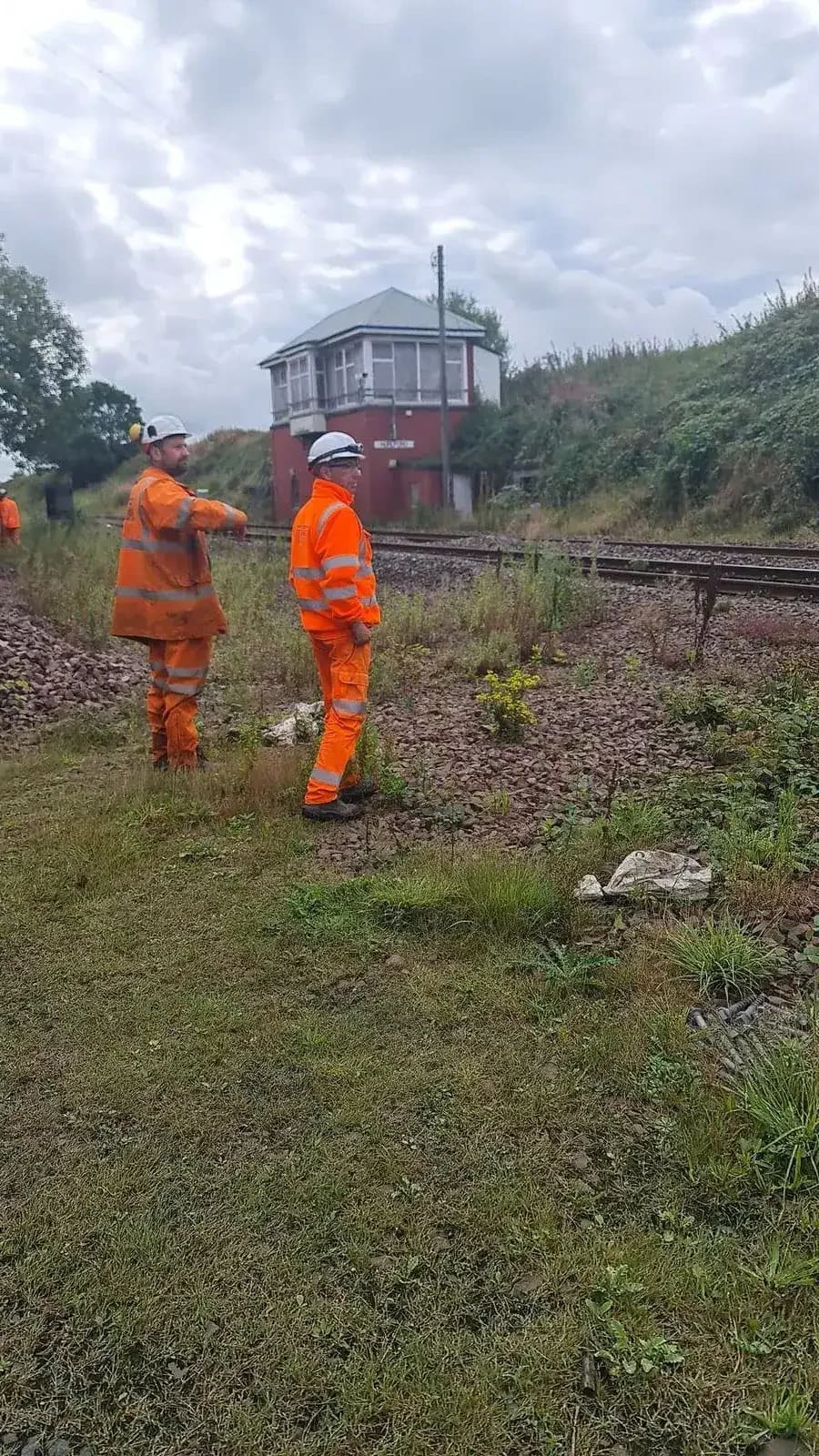
The reasons for using buried pipe & cable locators, and the health, safety and financial consequences when it goes wrong — with real "getting it wrong" examples demonstrated and discussed.
HSG47, legislation & company policy
How to comply with HSG47 (Avoiding Danger from Underground Services), the other national legislation that applies, and the company policy documentation that sits around it.
Understanding a permit to dig
What a permit to dig is for, what it does and does not authorise, and where it sits within a safe system of work.
Plans & drawings
2 topicsReading Buried Service Plans (STATS)
Interpreting the different types of utility service plan, including their keys and symbols — and what they do, and don't, tell you about the ground beneath your feet.
PAS128 drawings & surveys
How to read PAS128 drawings, and the important difference between a PAS128 survey and a Utility STATS plan.
The science of detection
2 topicsElectromagnetic theory
How pipe & cable locators actually work — the underlying theory, the real-world limitations, and the practical tips and tricks that only come with experience.
Myth busting
A dedicated session on what the equipment genuinely can and cannot locate, so delegates leave with realistic expectations of the kit rather than false confidence.
Recorded data (optional)
1 topicData logging & C.A.T. Manager
Using C.A.T. Manager software to download and analyse recorded locator data, so usage can be reviewed and evidenced — C.A.T.4 specific.
On the ground · the practical
Five disciplines, assessed individually
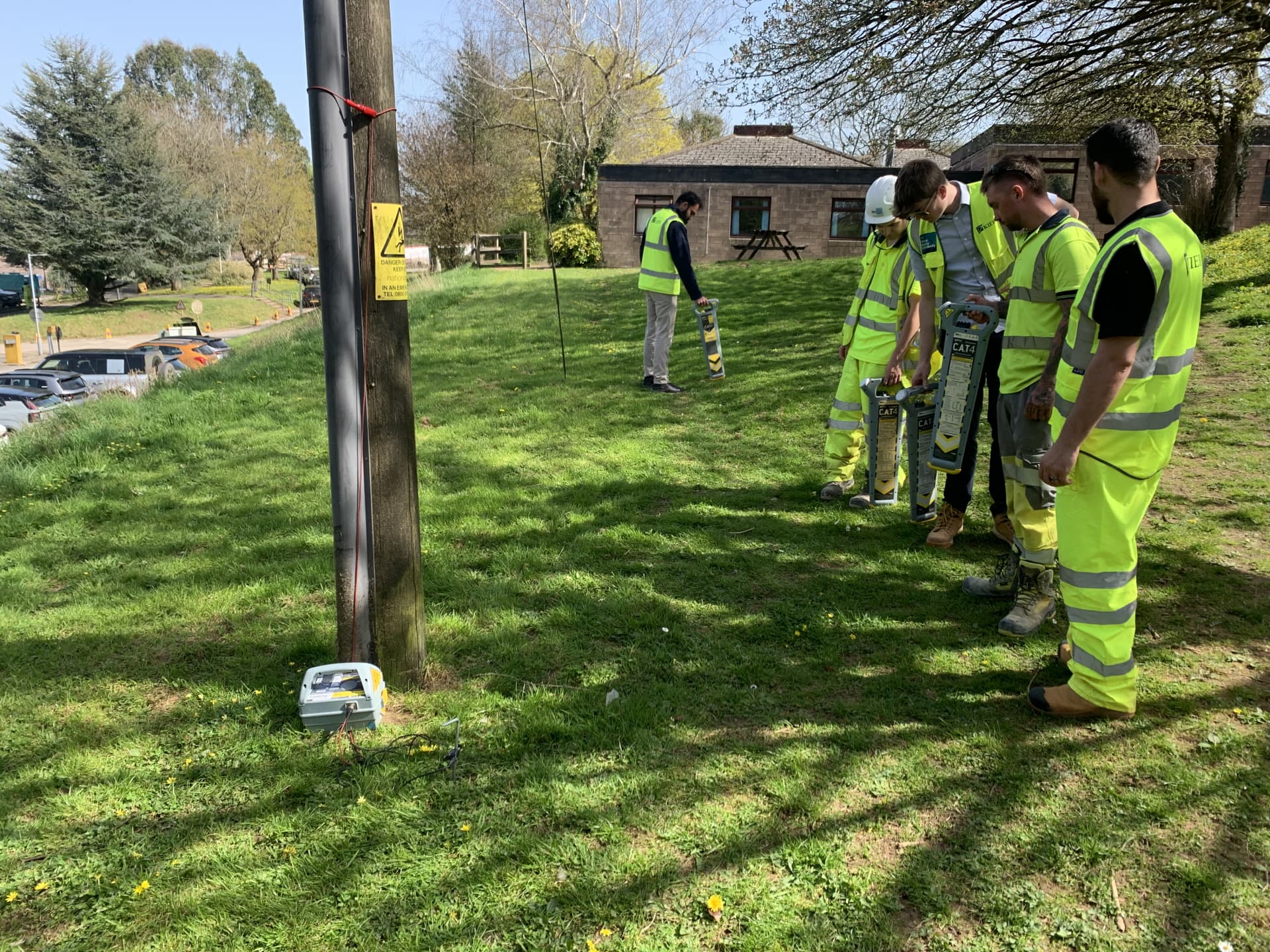
More than half the day is hands-on. Every delegate is trained and assessed on each of the following — strong emphasis throughout on Genny use and the Genny-and-CAT combination.
Pre-survey
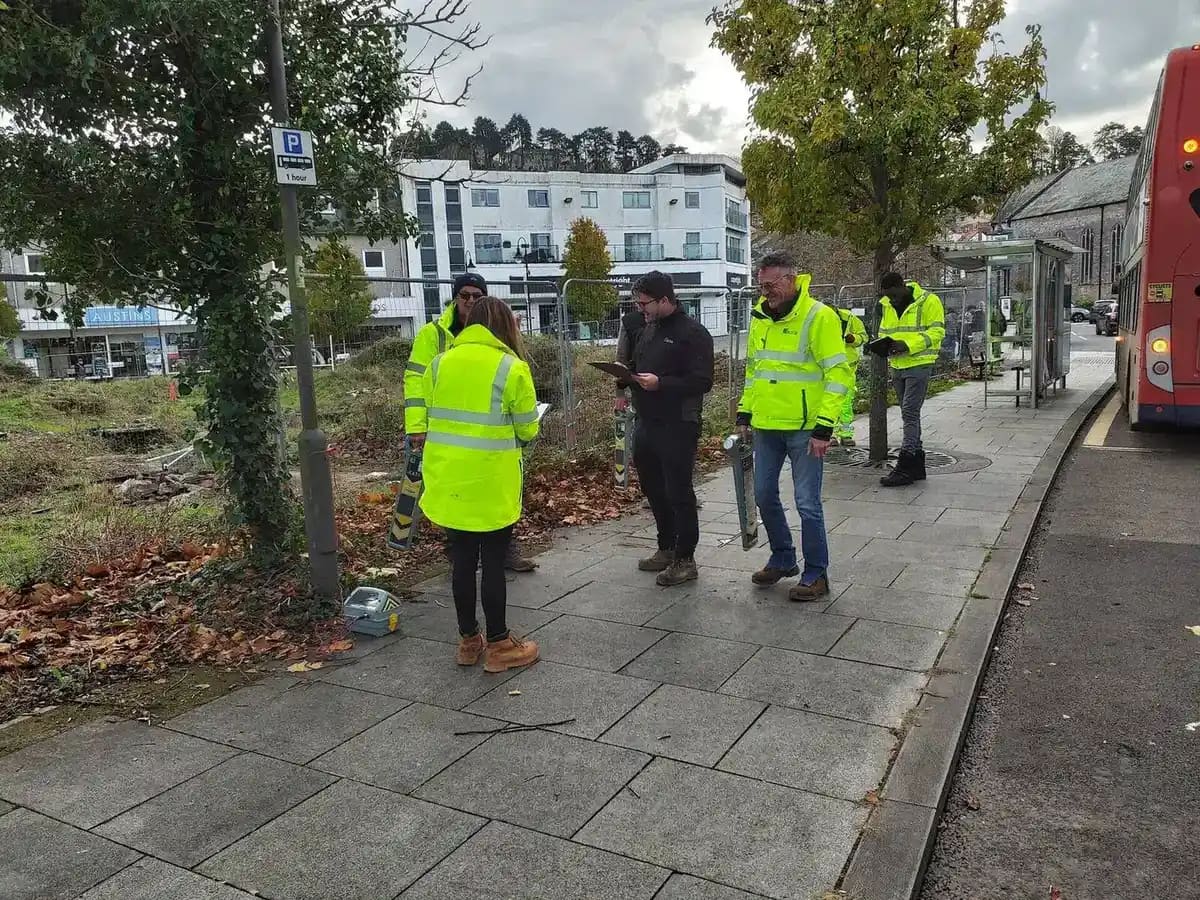
Before a single sweep, delegates learn to read the ground from the plans and prove the kit is fit to use.
- Read utility plans from all providers, including keys and symbols
- Complete a visual survey alongside the plans, spotting surface indications of services
- Pre-use equipment checks — function check and in-service date check
- Understand the limitations of electromagnetic locators
- Plan the survey using the Genny and CAT based on the site
- Understand a permit to dig
Transmitter (Genny) applications
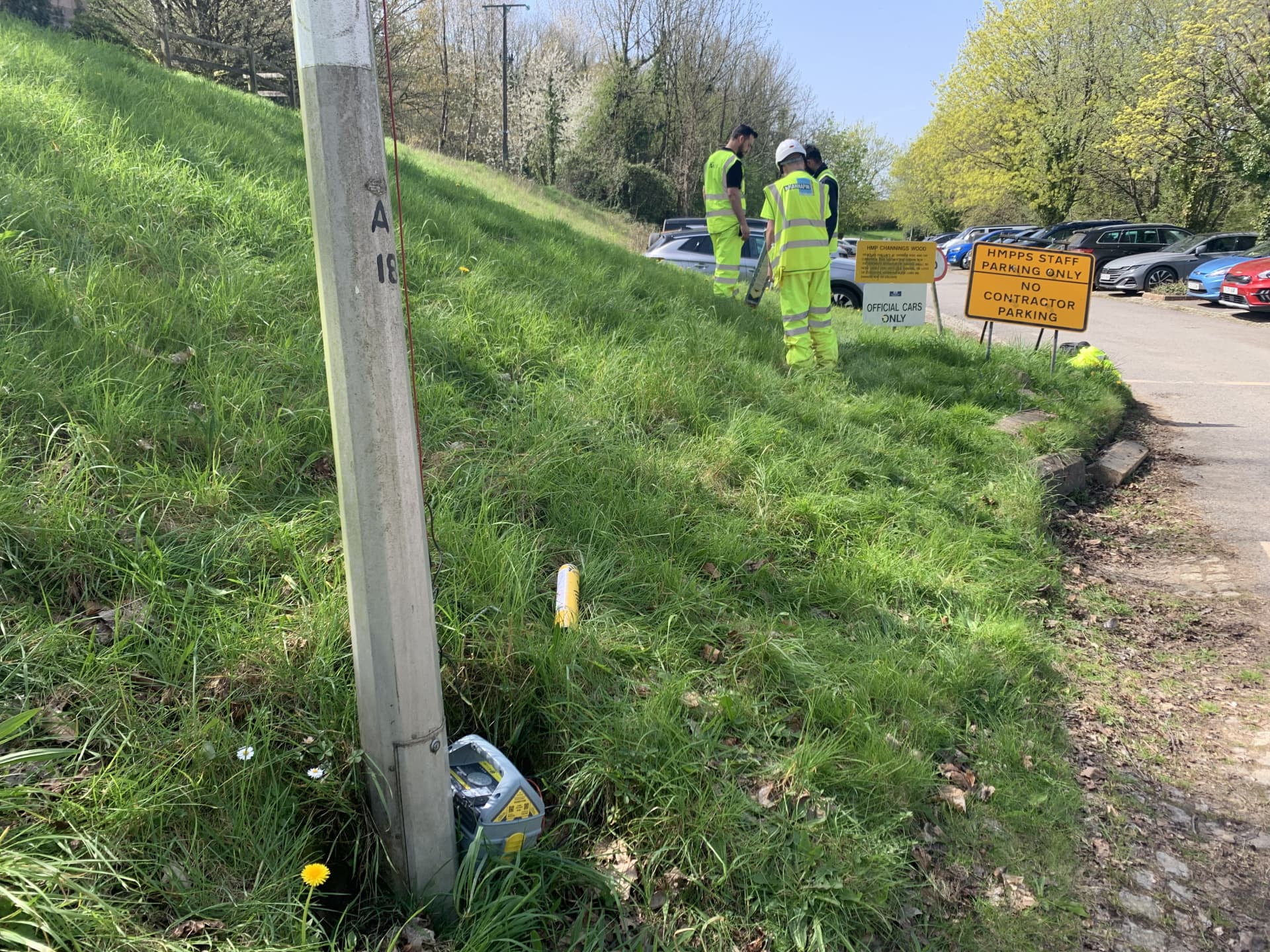
The heart of the course. Every way to apply a signal — and how to confirm it has actually taken.
- Direct connection to a known utility; correct earthing; confirm the connection and signal
- Signal to a street-light cable via direct connection, correct technique and distance
- Signal to a domestic LV service at a property or building
- High-frequency signal using a capacitance technique
- Signal applied using the signal clamp, correct technique and distance
- Induced signal to a known target, correct technique and distance
- Blind induction sweep in two directions across a site
- Null out a buried utility
- Check for airborne signal in all inductive applications
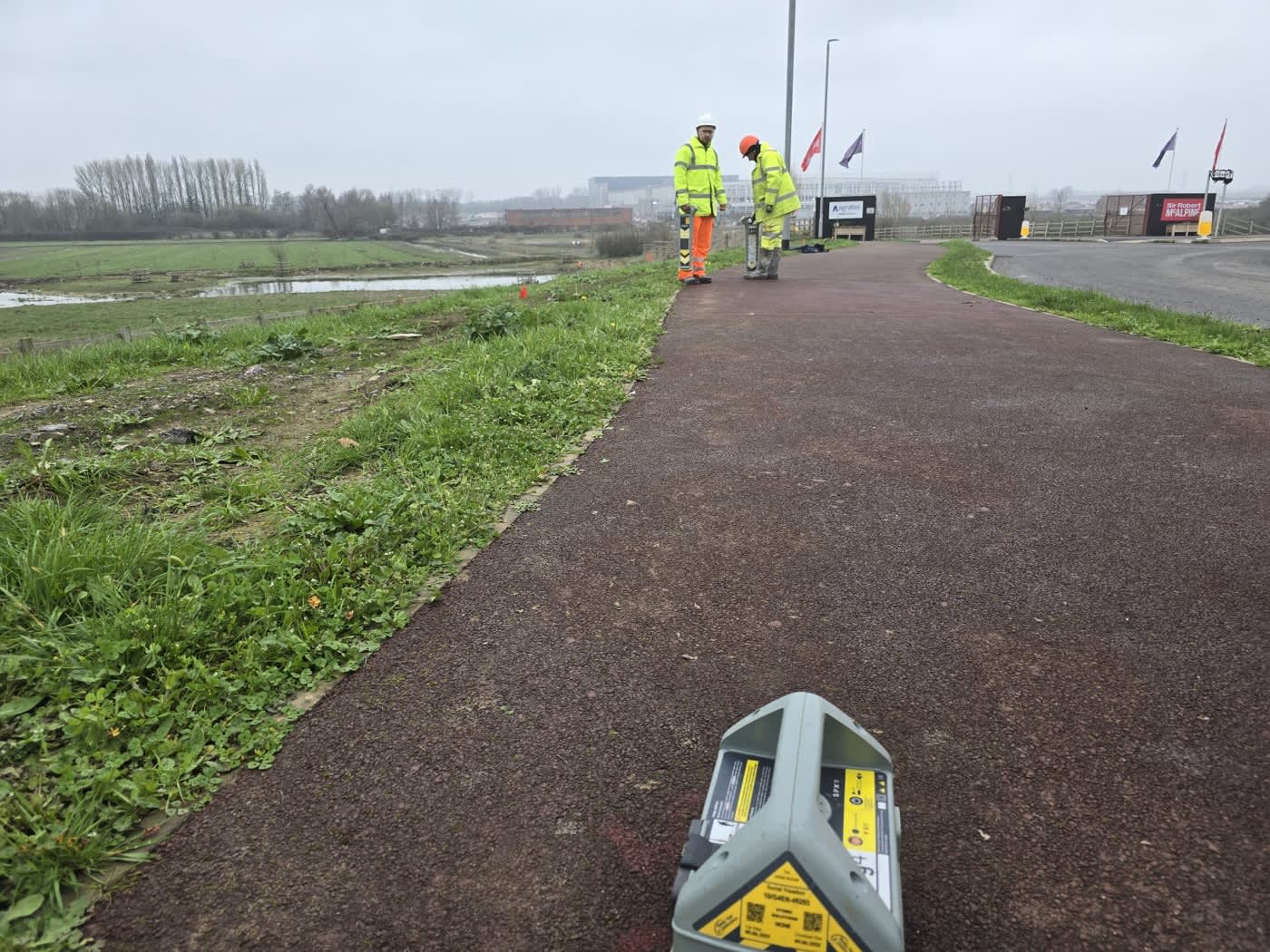
Locating — pinpointing & tracing
Turning a signal into a marked, traced, depth-checked line on the ground.
- Control sensitivity to locate then pinpoint the utility
- Determine direction, trace using the correct technique and mark its position
- Identify sudden signal loss and explain why it can occur
- Locate a joint — T-connection / bend
- Recognise being too close to the transmitter; correct erratic sensitivity
- Depth estimates at the correct distances; know when depth is unreliable; check it two ways
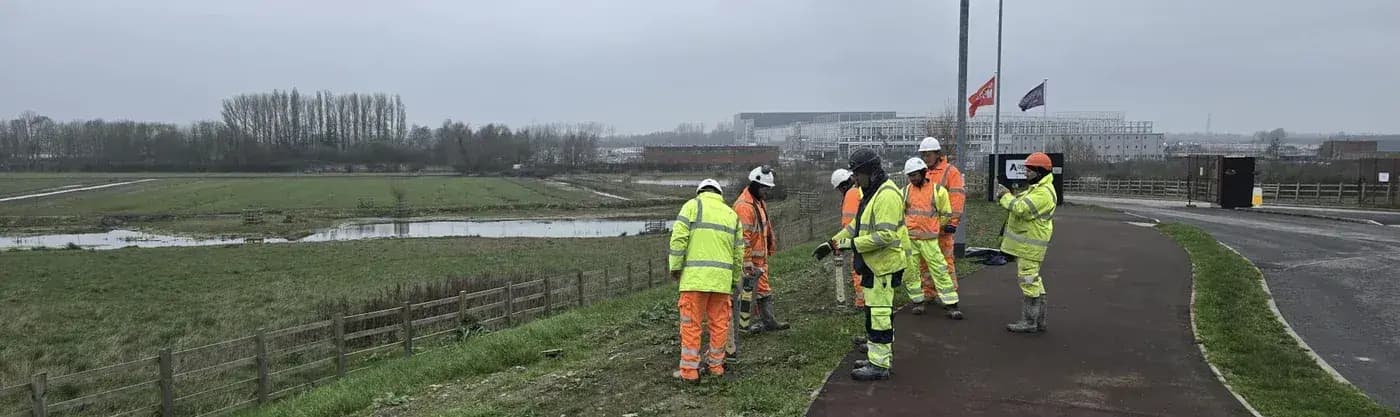
General technique & strategy
The judgement that separates a competent operative from a button-pusher.
- Use the plans to apply the transmitter signal in the best place throughout the survey
- Limitations of locating HV cables, and inducing a signal to find them
- Transmitter first — exhaust all connection options before induction, all active before passive
- Dual-frequency transmitters — the benefits of both frequencies
- Limitations of induction (the signal is not "selective"); when to run a blind sweep
- Continuously scan as the excavation progresses, and why
- Strike Alert — uses and how to disable
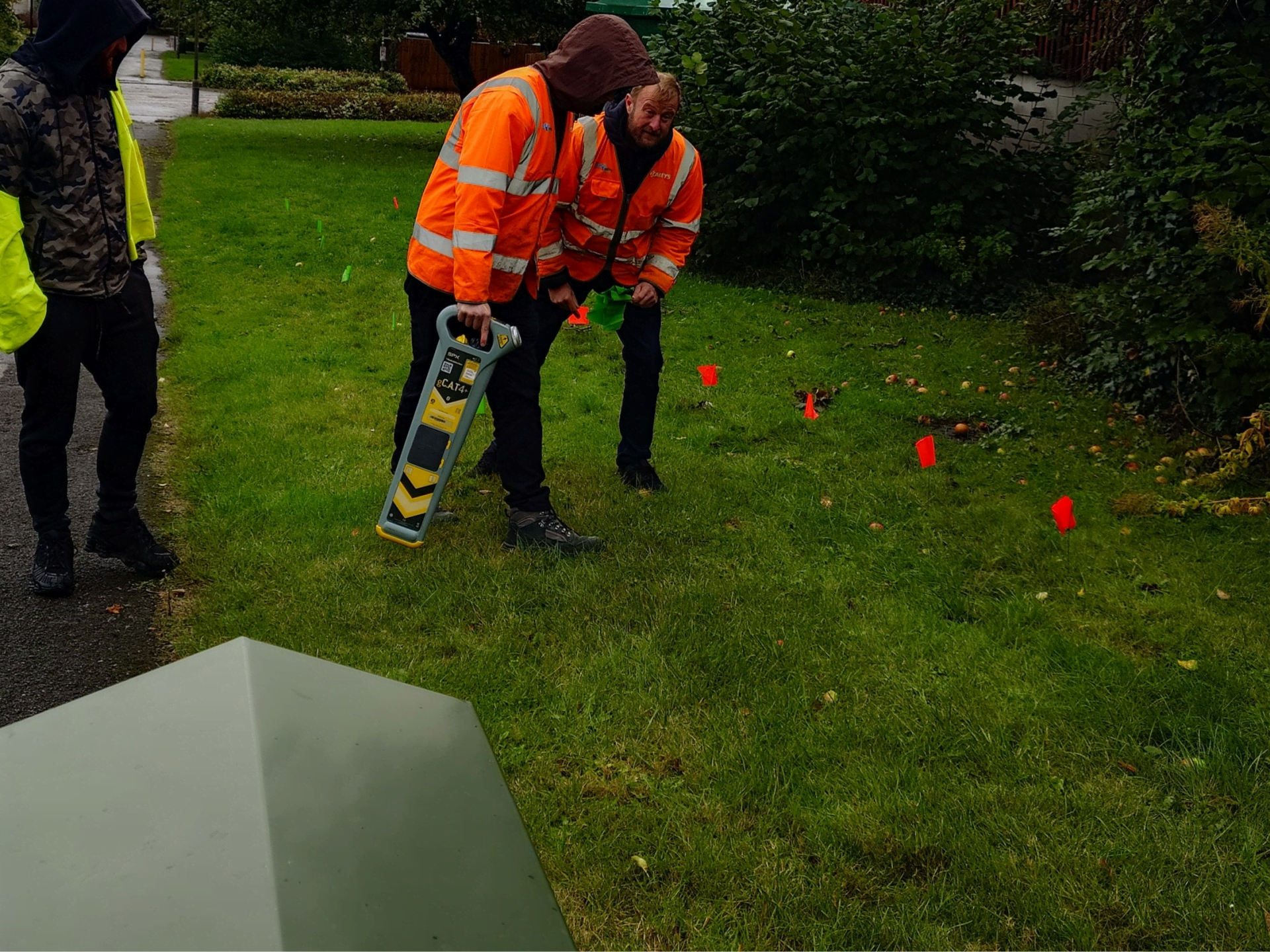
Passive (Power & Radio)
Catching what an applied signal can't — power and radio passive detection, done correctly.
- Power survey using the sensitivity control appropriately and the correct search technique
- Radio survey using the sensitivity control appropriately and the correct search technique
On the day
What we need from the host site
Sygma bring the equipment, the trainer and the expertise. To run a full, properly-assessed day, the site needs:
- ✓STATS plans (buried service drawings) for the practical site — Sygma can supply for an agreed cost
- ✓Delegates ideally bring their own kit; Sygma bring enough Genny4 & C.A.T.4+ for a standard course (non-C.A.T.4+ kit: 1 locator per 3 people)
- ✓On-site parking suitable for a transit-sized van
- ✓A room that seats all delegates + trainer, with welfare facilities and a wall/screen for a projector
- ✓Enough desk space per delegate (notes + written exam)
- ✓Appropriate PPE per national, company and H&S requirements
- ✓A practical area with numerous buried metallic utilities nearby (one cable to a cabin is not enough)
- ✓Host risk assessment of the site and training room; brief the trainer on any risks
- ✓Government photographic ID per delegate (driving licence, passport or residence permit)
Assessment
A multiple-choice written assessment, plus a practical assessed individually by the Sygma trainer on the day. Delegates with dyslexia or reading difficulties may sit an oral assessment.
Accreditation & standards
EUS Category 1: Locate Utility Services (HSG47)
The industry-agreed standard for safely detecting utility services using recognised, approved methods. Derived from National Occupational Standards and HSE guidance:
Next step
Arrange this course or check dates
On-site UK-wide or open courses at our Wigan centre. Send us your numbers and location and we'll come back with dates and a price.